

2005:2
Fiction from Majgull Axelsson and Henry Parland.
Editor: Sarah Death
What do literary translators do for us, and is it a role to which younger people aspire today? Speaking at the award ceremony in London for the Independent Foreign Fiction Prize 2005 on behalf of the judging panel, Julian Evans quoted Pushkin’s definition of translators as “the post horses of literature”. If this metaphor has somewhat unexciting, plodding connotations for us now, we should remember how crucial the post horse was in Pushkin’s day. Perhaps the modern equivalent would be pilots of budget airlines, facilitators of twenty-first century mobility between places and cultures.
The craft of translation has also been likened to other professions. Thomas Warburton, eminent literary translator from English and Finnish into Swedish, a Finland-Swede with family roots in the north of England, recently published his memoir: Efter 30 000 sidor: från en översättares bord (After 30,000 Pages: From a Translator’s Desk. Söderström and Atlantis, 2003). In it, he calls translators literary plumbers, whose task is to make literary communication flow. Without them, we would all have a more limited or insufficient water supply. One might add the parallel of urgency: like plumbing repairs, translations are often required in a rush.
To judge by the number of enquiries SBR has received in recent months from language graduates and others, literary translation is still a profession to which the younger generation aspires. In general terms, advice offered by an established colleague some twenty years ago still holds good. First, never turn down a job if you can help it; gaining practice in as many varieties of text as possible is invaluable in your development as a translator. Second, read all you can, not only in your source language but also your target language and mother tongue. To paraphrase Thomas Warburton: a would-be translator should become a literary omnivore; in translating, you will need to be a chameleon, but you can’t achieve that unless you have first laid down the layers of colour in your skin.
The Summer 2005 issue of In Other Words, the journal of the Translators’ Association in Britain, contains a report from a successful seminar held in February 2005, funded by the Nordic Council of Ministers’ Network North project. This was designed to help beginner translators from the Scandinavian languages orientate themselves in the field, and offered advice on both potential pitfalls and support networks. It would be wonderful if the resources existed to allow all would-be literary translators to attend such events. In Other Words also includes a report from a recent and revealing TA workshop on rates of pay. More transparency in this area is much to be welcomed for literary translators of the future.
Translations

Translation
from The Woman I Never Was
On a business trip to a fictitious Eastern European country, Sverker picks up a young prostitute, and the next morning he is found lying on the street with a broken neck.
Translated by Linda Schenck.
Translation
from To Pieces
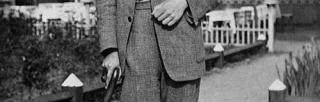
Drawing on the language of photography, Parland evokes the process of writing – and suggests that much of life is in our heads. Proustian moments in 1920s Prohibition Helsinki.
Translated by Dinah Cannell.
Reviews
Fiction

REVIEW
Breven
This long, long story alludes to five letters of the Roman author Ovid to his “brother Quintus”.
REVIEW
Du är alltså svensk? En triptyk
But You Are Swedish, Aren't You? is an absurd, rollicking yarn whose hilarious dialogue draws on contemporary political and business jargon and philosophy-lite to satirize (mostly male) power, and yet offers insights into the human heart.
REVIEW
Den amerikanska flickan
The American Girl takes an ambitious stylistic leap into a more fragmented narrative, a post-modern, kaleidoscopic vehicle conveying the chaotic, inexplicable and unintelligible world of children and adolescents from dysfunctional families.
REVIEW
I väntan på en jordbävning
Under cover of darkness, on the night train from Moscow to Helsinki, Ivan Demidov tells the story of his life to a virtual stranger. The listener, much like the author of this book, is a woman, a writer, a Russian living in Helsinki.
REVIEW
Gregorius
Bengt Ohlsson's novel plays off an ingenious conceit, retelling the events recounted in Hjalmar Söderberg’s classic novel Doktor Glas from the point of view of that novel’s cuckolded and ultimately doomed priest, Gregorius.
REVIEW
Herrgården
The Manor House is a chilling tale of rivalries, jealousies and passions. The central plot has the claustrophobic confinement of a chamber play, yet the action takes place against a disturbing backdrop of the breakdown of social order in an unspecified place and time.
REVIEW
Våt sand
Zvonimir Popović's novel is a poetical work that forms a strong and complex picture of the Yugoslav experience while at the same time reaching beyond particularities of time and place.

REVIEW
Härifrån till allmänningen
Steve Sem-Sandberg's documentary novel is contained within a narrative alive with fantasy and wry humour, a fascinating and engrossing break with Sem-Sandberg’s usually systematic and lucid style.
REVIEW
Försvinnarna: en efterforskning
This novel, if we can call such a hybrid book a novel, opens with some stark official statistics: since 1965, a total of 176,164 individuals have been reported missing in Sweden. Of these, 21,492 have never been found.
REVIEW
Lang
Westö’s latest oeuvre is a classic psychological thriller set in the Finnish capital, Helsinki.
Poetry

REVIEW
Karkas. Fem linjer
This is a difficult and demanding but above all beautiful book, in which short spare poems of elegiac lyricism contrast with longer works with an extraordinary sense of the rhythmic possibility of the Swedish language.
Non-fiction

REVIEW
Béla Bartók mot Tredje Riket
Kjell Espmark’s Béla Bartók vs. the Third Reich is about the Hungarian composer and musicologist, who championed the musical traditions of cultural minorities in the Second World War.
REVIEW
Terra Nullius: En resa genom ingens land
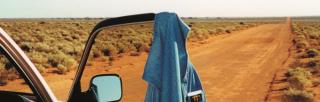
In Terra nullius we encounter Sven Lindqvist's intriguing blend of travel writing, history, and personal indignation about man’s inhumanity to man, all related in Lindqvist’s characteristic, calmly paced, consciously laconic tone.

REVIEW
Alla vilda
All Wild is deceptive – a work of autobiography far greater than the sum of its parts.