

2007:1
Fiction from Ann Granhammer and Lotta Lundberg, and a report on Swedish literature in Croatia.
Editor: Sarah Death
Deputy Editor: Neil Smith
Reviews Editor: Henning Koch
Carl Linnaeus, the renowned Swedish naturalist, is said to have claimed he would really like to have been famous for creating the world’s first truly spherical cultured pearl. He apparently hoped his experiments with pearl culture in the River Fyris in Uppsala might prove a spectacular success. Instead, in his tercentenary year, it is as a botanist and taxonomist that he is celebrated worldwide. But sideways looks can help us discover surprising new angles, and that is what this issue of SBR provides: not so much the man himself, more the way he is reflected in others’ texts: from literature, in the novels of Ann Granhammer and Magnus Florin, to popular science, in the writing of Sven-Eric Liedman. The extracts from, and commentary on, the diary of Pehr Kalm, a Linnaeus “apostle” who came to study England in 1748, combine social and scientific observation, and highlight interesting contrasts with Sweden: in climate, agriculture and pollution, for example. We hope this issue of SBR will whet readers’ appetites and encourage them to follow some of our suggestions for further reading. The many tercentenary events will make Linnaeus even better known here, especially the creation of a garden in the Linnaean spirit in May 2007 for the Chelsea Flower Show, which will be visited by their Majesties the King and Queen of Sweden.
Like Linnaeus’s apostles we, too, range far and wide: to Croatia, for the latest in our series on how translated Swedish literature fares in other European countries; to New York and Vienna for Lotta Lundberg’s powerful fictional exploration of “normality” and what constitutes a worthwhile human life; and to Uppsala in Sweden in the early twentieth century, to glimpse the tough life of a midwife described in Kerstin Ekman’s novel God’s Mercy. As for our cover picture of the Linnea borealis, this flower was the subject of an article Kerstin Ekman wrote jointly with Gunnar Eriksson in Dagens nyheter in January 2007. “With becoming modesty,” they wrote, “Linnaeus linked the qualities of the plant to those he attributed to himself: ‘My flower. Low growing, blooming briefly, easily overlooked.’ But it was undoubtedly his love of the plant that made him adopt it as his trademark. In his Flora Suecica he writes that it smells like a sweetmeat and that at night its scent carries over long distances.”
“May you live in interesting times” runs a traditional Chinese curse, and these are certainly interesting times for those concerned about the future of Swedish state support for translation. One very heartening consequence of recent developments has been the international clamour in the Swedish press and on the Internet from people who usually work relatively unseen: literary translators from Swedish have resolutely stood up to be counted and to make their feelings known.
Translations
Translation
from The Look of the Nasturtium
Ann Granhammer's novel follows the daughter of Carl von Linné as she discovers the systems that govern life.
Translated by Julie Martin.
Translation
from Roll Up! Roll Up!
Set between New York, Berlin and Stockholm, Lotta Lundberg's novel takes place as the utopian ideals of the early thirties give way to Nazism and eugenics.
Translated by Sarah Death.
Features
Article
Swedish Literature in Croatia
Željka Černok contributes to our series on how translated Swedish literature fares in other European countries
Reviews
Compiled and edited by Henning Koch
Fiction
REVIEW
Regissören
The novel created a furore on publication in Sweden, where Bergman vented his displeasure on national television.
REVIEW
Den indianska krassens blickande
The Linnean system effectively excluded girls from formally studying botany. Ann Granhammer’s novel about the daughter of the great natural scientist can be read as a metaphor for the fate of a whole generation of young women.
REVIEW
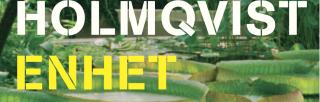
Enhet
Ninni Holmqvist’s novel is set in the future, in Sweden, in a society where politics are driven by the forces of economic rationalism, and ethical considerations no longer play a role in its institutions.
REVIEW
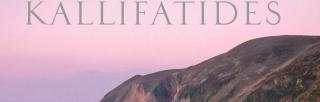
Herakles
Theodor Kallifatides has produced a novel that is more than an update of the Hercules story.
REVIEW
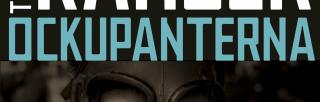
Ockupanterna
Thomas Kanger's novel tells the story of the sudden and unexpected occupation of Korsør in Denmark.
REVIEW
Nobels testamente
The stage is set for the sixth Annika Bengtzon novel by Liza Marklund, in which our heroine finds herself in the murky world of cutting-edge medical research, where the financial and academic stakes are huge, and mutual suspicion and back-stabbing are the norm.
REVIEW
Drottningens chirurg
Agneta Pleijel's historical novel, set in the eighteenth century, is a study in childbirth.
REVIEW
Där vi en gång gått
Kjell Westö’s epic novel spans the early twentieth century and a volatile period of Finland's history.
Non-fiction
REVIEW
Den nya kvinnostaden: Pionjärer och glömda kvinnor under tvåtusen år
Most of the great women depicted in Nina Burton's book were pioneers in ways that might have led to certain death.
REVIEW
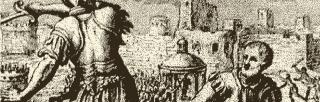
Arkimedes. Matematiker, vapenmakare, stjärnskådare
Roland Poirier Martinsson gives us a biography of the elusive Archimedes.