
2007:2
Previously untranslated pieces by Astrid Lindgren and fiction from Niklas Rådström.
Editor: Sarah Death
Deputy Editor: Neil Smith
Reviews Editor: Henning Koch
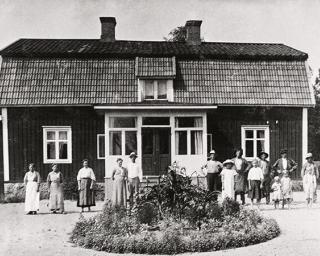
Image: Astrid Lindgren's childhood home at Näs.
Patricia Crampton wrote in the 1991 SBR Children’s Literature Supplement about how fortunate she felt in the 1970s to be able to translate so many of Astrid Lindgren’s beautifully written books. Now a somewhat younger set of translators will get an opportunity to add this to their own experience, as Oxford University Press embarks on an ambitious project to retranslate many of Lindgren’s best-loved books. This autumn has seen publication of a lavish new centenary edition of Pippi Longstocking, translated by Tiiina Nunnally and illustrated by Lauren Child, which one hopes will introduce Astrid Lindgren to a new generation of children. Scheduled for publication in 2008 are the three Emil books, two Children of Troublemaker Street titles, and the three Karlson on the Roof books, with their anarchic eponymous “hero”, described by our contributor Paul Binding as “that eccentric, motor-propelled being”.
SBR is pleased to celebrate Astrid’s hundredth birthday with not only Paul Binding’s perceptive article but also two translations of pieces that have not been available in English before: “Never Violence!”, a seminal speech that expresses not only Lindgren’s pacifism but her belief that the way we bring up our children will have a profound bearing on the chances for future world peace; and her affectionate account of her parents’ courtship, “Samuel August from Sevedstorp and Hanna from Hult”.
The Lindgren centenary on 14 November 2007 is being celebrated around the world. Astrid Lindgren wrote 88 books and is Sweden’s most acclaimed children’s author. Her books have been translated into 76 languages; Pippi Longstocking alone is published in 57 languages. Lindgren always stood firmly on the side of the child and many of her characters challenge the adult world, as she did herself in her work as a campaigner on many issues.
The theme of writing for children extends through into the extract from Niklas Rådström’s The Guest, which embroiders on the historical fact of a visit paid by Hans Christian Andersen, arguably Denmark’s counterpart to Astrid Lindgren, to Charles Dickens in Kent in 1858.
A vulnerable child features, too, in the nightmarishly atmospheric opening scene from Johan Theorin’s In the Twilight Hour, which has become a major best-seller in Sweden. Three further books are planned in the series, set on the island of Öland; the first two titles at least will eventually be available in English.
Meanwhile, there is cheering news from Sweden about translation subsidies. The government’s budget announcement for 2008 promises the reintroduction of a subsidy scheme, with an increase in funds to seven million kronor annually. This sum will cover grants for translation of both fiction and non-fiction, sample translations, plus support of translators and events abroad. The scheme will be administered by Sweden’s Arts Council (Statens kulturråd) rather than the Swedish Institute. Details have yet to be finalized, but it seems likely that a new centre for Swedish literature will be set up.
Translations
Translation
Never Violence!
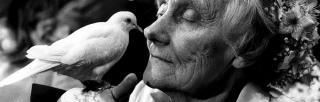
The world is very familiar with Astrid Lindgren the children's writer. Her role as an opinion former is less widely known. This speech, delivered when she collected the German Booksellers' Peace Prize in Frankfurt in 1978, appears in a new anthology focusing on Astrid Lindgren as an opinion former and campaigner.
Translated by Laurie Thompson.
Translation
Samuel August from Sevedstorp and Hanna from Hult
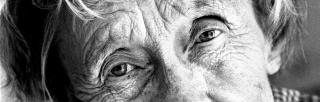
This affectionate tribute to her parents was first published by Astrid Lindgren in 1975.
Translated and abridged by Marlaine Delargy.

Translation
from The Guest
Rådström makes use of a "historic" meeting between Danish author Hans Christian Andersen and Charles Dickens in 1858 to create a tragi-comic meditation on the nature of creativity and its fraught relation to friendship and rivalry.
Translated by Frank Perry.
Features
Article
Astrid Lindgren for the Children of India
Arundhati Deosthale describes the Omnibus of Astrid Lindgren in Hindi currently being prepared.
Reviews
Compiled and edited by Henning Koch
Fiction
REVIEW
Svinalängorna
Susanna Alakoski’s emotionally powerful account, which won the Best Novel category of the August Prize in 2006, gives gut-wrenching insight into the life of the twelve-year-old daughter of alcoholics.

REVIEW
Motvilliga historier
Kjell Espmark's fifteen stories (or quasi-letters) form a chain of psychiatric case-studies.
REVIEW
Sjön utan namn
Kjell Johansson's second, free-standing part of a novel trilogy about a working class family.

REVIEW
Rummet under golvet
The last part of Kjell Johansson’s trilogy about Sweden’s lumpenproletariat during the construction of the welfare state.
REVIEW
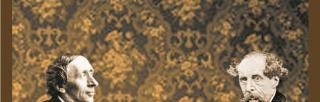
Gästen
Niklas Rådström's intriguing novel takes a sideways look at the visit of Hans Christian Andersen in 1857 to the home of Charles Dickens.

REVIEW
Kvicksand
Anne Swärd’s second novel is a disturbing account of a family blown apart, trying after 20 years to find each other (or perhaps avoid doing so).
Non-fiction
REVIEW
Granatklockorna i Myitkyina: En berättelse om Burma
Jesper Bengtsson paints a rich and well-balanced picture of Myanmar.
REVIEW
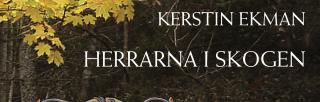
Herrarna i skogen
Kerstin Ekman’s collection of essays is an adventurous read through literal and literary forests.
REVIEW
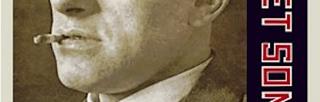
Med livet som insats. Berättelsen om Vladimir Majakovskij
The facts in Bengt Jangfeldt’s biography of Vladimir Majakovsky are remarkable: until this book came along we never actually had them.
REVIEW
Medicinska memoarer
P.C. Jersild's memoirs take us through his medical training and his subsequent career.
REVIEW
Ingen liten lort. Astrid Lindgren som opinionsbildare
This anthology is one of several books published to mark the centenary of Astrid Lindgren’s birth in November 1907, focusing on her role as one of Sweden’s foremost public campaigners.