

2010:1
Crime fiction special
Editor: Sarah Death
Deputy Editor: Neil Smith
Reviews Editor: Henning Koch
(Image: Mirroring mountains in Lake Ladtjojaure. © Fredrik Broman/imagebank.sweden.se)
A week into 2010, an analysis of bestseller lists from Europe’s seven biggest book markets reveals that Stieg Larsson, late author of the Millennium Trilogy, was the top-selling writer across the continent in 2009. The Top Ten also included Camilla Läckberg and Henning Mankell. Just inside the doors of a UK high-street branch of W H Smith, a Millennium display trumpets ‘read the books everybody’s talking about!’ Publishers from firms small and large talk of heading to the a Gothenburg Book Fair (see Laurie Thompson’s lively account of last autumn’s Fair in this issue).
By March, the travel section of The Times is devoting two pages to the ‘Secrets of Stieg’s Stockholm’, and no less than four books about Larsson are in preparation for the English-language market. The Swedish film of The Girl With the Dragon Tattoo goes on UK general release, and Hollywood sits up and takes notice. The Independent on Sunday runs a long article by Kate Youde, bringing in other rising stars such as Håkan Nesser, Johan Theorin and Mari Jungstedt. The compilers of the popular ‘Euro Crime’ website find themselves inundated with translated Swedish crime novels to review, and there is anecdotal evidence from publishers’ sales reps that booksellers are demanding only Nordic crime.
Swedish crime fiction has gone mainstream. What is its fascination? Gloomy Viking protagonists in frozen, island landscapes, and the darkest of crimes in the shadow of the collapse of the welfare state have been cited. But don’t we have our own broodingly disintegrating fictional detectives, broken society, and evil murder plots? Leading crime fiction reviewer Barry Forshaw perhaps puts his finger on it when he says that for us, Sweden is sufficiently the same, yet sufficiently different. We are all ‘complaining people in a cold climate’, he suggested at the recent, packed discussion evening, ‘Crimes of the Millennium’, at the Swedish Ambassador’s London residence.
What impact is all this having on the uptake of literary works from Sweden? The issue is addressed for us here by Paul Engles in his survey of the current publishing scene. We also present the latest in our series highlighting other European countries: Paul Berf describes Germany’s love affair with Swedish literature, led by, but not confined to, its crime fiction.
In the first SBR crime fiction special since 2001, we have selected some top-quality, genre-broadening authors still largely undiscovered in the English-speaking world. Matchless storyteller Kerstin Ekman came to prominence here with Blackwater in 1995, but much of her superb writing remains to be translated. The intelligent thrillers of Arne Dahl have been on SBR’s radar for some time, but it is only recently that two Dahl titles have been acquired by a US publisher. Bestselling Viveca Sten and Finland-Swedish crime reporter Staffan Bruun complete the line up. Enjoy a voyage of discovery!
Translations
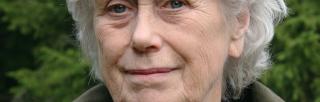
TRANSLATED EXTRACT
from The Practice of Murder by Kerstin Ekman
A novel in which the main character believes himself to be the model for Hjalmar Söderberg's eponymous protagonist Doctor Glas.
Translated by Sarah Death, Anna Paterson, Linda Schenck and Rochelle Wright.

TRANSLATED EXTRACT
from Still Waters by Viveca Sten
Viveca Sten's fist novel, set on the atmospheric island of Sandhamn.
Translated by Marlaine Delargy
Articles

FEATURE
Kerstin Ekman and Swedish Crime
In this essay Anna Paterson examines the ways in which Kerstin Ekman construes crime, its origins and consequences.

FEATURE
Swedish Literature in Germany: A Success Story, Only Slightly Flawed
Paul Berf describes Germany's love affair with Swedish literature, led by, but not confined to, its crime fiction.
Reviews
Edited and compiled by Henning Koch
Fiction
REVIEW
De oförglömliga
Gabriella Ahlström's first novel for adults is unlike other popular contemporary Swedish books in its focus on character over plot, and readers can appreciate its minutely detailed portrait of a woman who is constantly disappointed by her family and aware of their many faults and yet remains faithful and devoted to them.

REVIEW
Kan du säga schibboleth?
Fans of the Persepolis graphic novels will surely be charmed by Marjaneh Bahktiari's feisty young female characters.

REVIEW
Toffs bok
Kalle Dixelius offers a modern version of our very oldest stories: a young man living in poor conditions feels a strong inner urge to embark on a dangerous and often life-threatening quest in search of a deeper meaning in life.
REVIEW
Mordets praktik
Kerstin Ekman’s first-person narrator, a down-at-heel physician, follows up on a chance encounter with the writer Hjalmar Söderberg by providing him with information on potassium cyanide pills as an instrument of death...
REVIEW
Den siste greken
Aris Fioretos has written a wry meditation on human identity, loss and longing, and what it is to be Greek.
REVIEW
Edens bakgård
P.C. Jersild's novel raises questions concerning some of the odder reaches of Swedish life – the ‘back yard of Eden’.
REVIEW
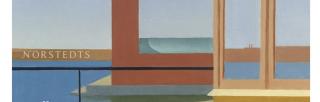
Människor helt utan betydelse
The thoughts of Johan Kling's protagonist in this novel are far less meaningless than the talk of Habitat, house prices and holidays in Portugal which make up the conversations around him.

REVIEW
Flickvännen
Karolina Ramqvist's gangster girlfriend plays happy homes in a novel highlighting the ease with which women (and men) can slide into a conscience-free virtual reality of glamour and luxury.

REVIEW
Hitta hem
Elisabeth Rynell captures the mystical mood of her earlier novels – the wonder of the awe-inspiring scenery, the changing seasons – with the quality of legend.
REVIEW
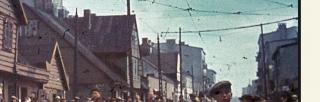
De fattiga i Łódź
One of the many triumphs of Steve Sem-Sandberg's narrative is that it shows how the mechanics of persecution operate within a society of the persecuted.

REVIEW
Kall feber
Jerker Virdborg is back, with an engrossing, fast-paced, deeply unsettling dystopian tale.
REVIEW
Gå inte ensam ut i natten
Kjell Westö is a first-class storyteller and you don’t have to be interested in Finnish history to enjoy his books.
REVIEW
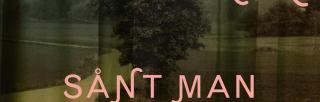
Sånt man bara säger
Helena von Zweigbergk is an accomplished storyteller, and the problem of this unfortunate family is compelling.
Poetry

REVIEW
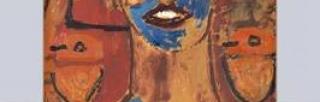
Men hur små poeter finnes det egentligen?
Eva-Stina Byggmästar's poems are about the joy of writing poetry, of being a poet, of what poetry is and means.
REVIEW
The Procession of Memories. Selected Poems 1929–1945
This bilingual edition fills a gap and introduces readers to Harry Martinson's poetry.

REVIEW
Barndomstolen
The poet Ulf Karol Olov Nilsson knows the extent of power a word can hold. In this collection, the absurd is juxtaposed with the tragic.
Non-fiction
REVIEW
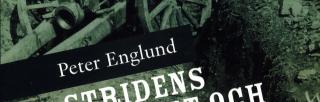
Stridens skönhet och sorg. Första världskriget i 212 korta kapitel
Peter Englund’s book shows that there is still much to be said and new perspectives to be taken on the First World War.