

2010:2
Fiction by Håkan Nesser and Agneta Pleijel, and tributes to the poet Ragnar Thoursie and scholar-poet Göran Printz-Påhlson
Editor: Sarah Death
Deputy Editor: Neil Smith
Reviews Editor: Anna Paterson
(Image: The midnight sun in northern Sweden. © Thomas Utsi/imagebank.sweden.se)
It was very cheering for the translation community to hear bestselling Henning Mankell say in answer to a question on BBC Radio 4’s ‘Book Programme’ recently that if there was a hero in his life, it was the translator. Another of Sweden’s foremost crime writers, and one who also values his translators, is Håkan Nesser, whose Van Veeteren series is now appearing in English. His free-standing psychological thrillers are equally compelling, as the taster in this issue from The Worms on Carmine Street will show.
Agneta Pleijel is one of the doyennes of Swedish literary fiction. She has made historical fiction based on authentic background material her speciality. The extract from The Queen’s Surgeon sheds light on a fascinating period when surgeons were still treated with disdain.
We are in the company of poets in this issue of SBR, not only the three Swedish poets featured here, but also a wider community. This broader group, European and American, were those encountered by SBR’s editor when she attended a recent memorial day for Göran Printz-Påhlson in Cambridge. It was a scholarly yet inclusive and informal event, with friendly exchanges of ideas between poets, translators, translators who were poets, and vice versa. The distinction was gloriously blurred.
Assembling this issue of SBR has at times been rather melancholy work. The friends and colleagues attending the Cambridge event could not help mourning Göran’s death even as they celebrated his life and work. During the editorial process we also, sadly, received news from Sweden of the death of another featured poet, Ragnar Thoursie. With the help of his publisher we were able to contact his son, who told us that Thoursie, though in poor health, had been read the translations and was pleased with them, so they are published here as a tribute to him, with his son’s blessing.
Three poets, three very different approaches, three distinctive languages: the dizzying esoteric games of Printz-Påhlson; the warm social conscience and meditation on ageing offered by Thoursie; and from our third featured poet, Finland-Swedish Eva-Stina Byggmästar, a Sapphic voyage through the landscape of the imagination, its dazzling wordplay a real challenge to the heroic translator.
In this issue we introduce our new Bookshelf editor Anna Paterson. Anna is not only a translator but also reviews Scandinavian books for the British national press, World Literature Today and other publications. She brings energy, enthusiasm and impressive background knowledge to her new role.
Translations

TRANSLATED EXTRACT
from The Worms on Carmine Street by Håkan Nesser
The Worms on Carmine Street is about the search for a child who has disappeared. But it is also about other things: guilt, loss and existential loneliness – and about being taken in by circumstances over which a person has no control.
Translated by James Walker

TRANSLATED EXTRACT
from The Queen's Surgeon by Agneta Pleijel
The Queen's Surgeon is the first part of a family history that draws on aspects of Agneta Pleijel's own history, discussing power, gender and insatiable ambition.
Translated by Silvester Mazzarella
Articles

FEATURE
Care - a Nobler Form of Love
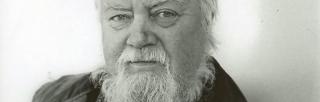
A tribute to Ragnar Thoursie (1919-2010) – poet and civil servant – who died aged 90 on 12 July 2010.
By Brita Green. Translations by Brita Green and John Charlesworth.
FEATURE
The Göran Printz-Påhlson Memorial Seminar and Poetry Reading, June 2010
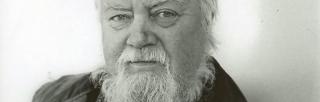
Sarah Death reports on a memorial day for Göran Printz-Påhlson, a Swedish poet, essayist, translator and literary critic, in Cambridge.
IN MEMORIAM
Even a Sort of Lone Ranger
Extract from a personal memoir of Göran Printz-Påhlson (3 March 1931 - 27 July 2006). Written in August 2006 and presented at the memorial event at Clare Hall, 2 June 2010.
Reviews
Edited and compiled by Anna Paterson
Reissued works

REVIEW
Tysk höst
Stig Dagerman's novel provides a brilliant depiction of the suffering, devastation and moral vacuum in war-ravaged Germany.

Novels

REVIEW
Drömfabriken
The tradition of Swedish worker literature is currently in revival; Maria Hamberg's novel continues that revival.

REVIEW
Till sista andetaget
Anne Swärd’s novel is beautifully written, in controlled, evocative, at times aphoristic language; there is writing to savour on every page.
REVIEW
Diplomaten
The second instalment in Alexander Ahndoril’s planned trilogy of novels based loosely on the lives of three living Swedes.


REVIEW
Eldar och is
Birgitta Stenberg has written an inventive autobiographical hybrid which subverts the genre.
REVIEW
Mäktig Tussilago
It is difficult to read Maja Lundgren’s new novel without being strongly aroused by it.

REVIEW
Vännerna
True to his trademark style, Lars Jakobson’s novel is large and intricately constructed – a literary hybrid, alive with a pulse that oscillates between fiction and documentary.
Crime fiction


REVIEW
Lilla stjärna
For all the gore, John Ajvide Lindqvist's novel transcends the formulaic boundaries of horror fiction to probe at the interaction of exclusion, powerlessness and violence.

REVIEW
Hypnotisören
When it became obvious that this first novel in the series was going straight to the top of the leader board, the media started to chase the elusive Lars Kepler.

REVIEW
Paganinikontraktet
Lars Kepler's novel is an exercise in political analysis – national and international bureaucracies, treaties and alliances – and classical music theory.
REVIEW
Mord i Havanna
Jan Mårtenson is a name that could feature alongside the several other Swedish crime novel authors who have gained a reputation in English translation.

REVIEW
De ensamma
Håkan Nesser’s crime novels featuring detective Van Veeteren have been translated into English. The stories about his latest detective, Gunnar Barbarotti, should be on the bookshelf of every English-speaking crime fiction fan.
Non-fiction

REVIEW
Vart tog all denna kärlek vägen?
Käbi Laretei's slim volume offers rich pickings to the celebrity-hunter, the cinéaste and the classical musician alike. Sets of love letters like this will soon be a thing of the past. One imagines the leading auteurs of the twenty-first century prefer more ephemeral means of communication.