
2012:2
August Strindberg 1912-2012
Editor: Sarah Death
Reviews Editor: Anna Paterson
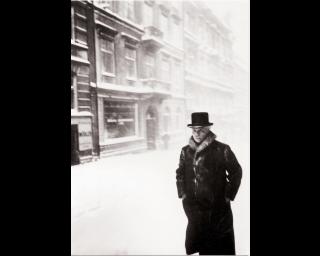
(Image: August Strindberg on 9 April 1912. Photograph by Magnus Wester)
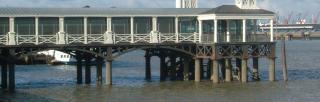
The short pier running out into the Thames from the north Kent town of Gravesend was for many years home to a plaque marking one of the very few places in Britain ever visited by world-famous Swedish playwright August Strindberg. The plaque, removed during renovations, now languishes at the back of a crowded storeroom, but the man continues to fascinate and provoke us in equal measure, as this special issue shows. Charlotte Purkis has done fine detective work on the events of his 1949 centenary and his fan base at the time the plaque went up.
Translator Eivor Martinus, whose essay evokes a whole life coloured by her discovery of the playwright, reflects on why he never had the breakthrough here enjoyed by Ibsen or Chekhov. His unpredictability and lack of restraint, she has found, can unsettle both audiences and actors.
Strindberg’s acerbic observations on the power of the press in the extract from The New Kingdom, appearing in English for the first time, are vividly rendered by Peter Graves and have uncomfortable echoes in our own day. Graves is another of our outstanding translators who has spent a great deal of time in the company of Strindberg’s texts.
It bodes well for Strindberg’s future that this centenary year has generated various student productions and projects. We report, for example, on a mentoring scheme to produce new versions of some of the one-act plays and a Red Room project running at UCL throughout October. After a slightly slow start, there have been a good many new Strindberg productions around the UK this year, though few British directors have publicised their projects on the official centenary website strindberg2012.se. Our list makes interesting reading, even if it is not fully comprehensive.
Strindberg constantly wrote for the press alongside his other work and was also a prolific lifelong correspondent; we take a look at his highly personal and sometimes explosive articles and letters. His scientific experiments may have been of dubious value, but in the field of early photography at least, as we see in this issue, he did thought-provoking work with his ‘celestographs’. We also shed light on the inspiration for his very first drama, In Rome.
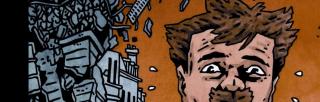
Who would have thought it? Strindberg is now big in the world of comic books, as the introduction to the extract from the graphic-novel version of Inferno reveals. A whole Paris exhibition on the subject was recently mounted in France.
This many-faceted writer is a worthy subject of SBRs first single-author issue for some years, rounded off with our usual broad range of reviews.
Translations
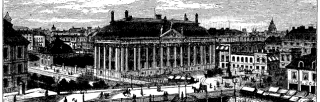
TRANSLATED EXTRACT
from The New Kingdom by August Strindberg
An extract from a volume of satirical sketches and short stories written in 1882, in which Strindberg takes aim at some of his critics.
Translated by Peter Graves
Articles
FEATURE
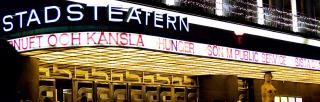
Strindberg in My Life
Author, translator and theatre director Eivor Martinus reveals her personal journey exploring Strindberg's craft.
FEATURE
August Strindberg the Journalist
Agnes Broomé examines August Strindberg's career as a journalist.
FEATURE
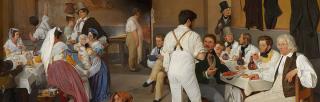
The Artist as a Young Man
Elettra Carbone explores Strindberg's representation of the young Danish sculptor Albert Bertel Thorvaldsen in his first play, 'I Rom'.
FEATURE
The Commemoration of the Strindberg Centenary of 1949 in Britain
Charlotte Purkis highlights 1949 as a crucial turning point for Strindberg's reputation in Britain.
FEATURE
Strindberg Illustrated
A survey of Strindberg-inspired graphic novels and similar works, by Ruth Urbom.
Reviews
Edited and curated by Anna Paterson
REVIEW
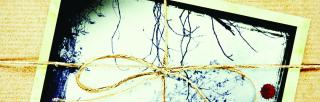
Skuggor
Handberg's novel hauntingly describes that strange, becalmed yet activity-filled bubble we inhabit between the death and funeral of a parent.

REVIEW
Ondskans pris
The historical setting of the story is as important as the investigative aspect of it.
REVIEW
Tolv månader i skugga
As we move smoothly and cinematically between locations, we sense that a secondary purpose of the author is to muddy the division between autobiography and fiction. Even our own lives are stories, after all, in which we figure as the heroes. Can anyone know this better than a filmmaker?
REVIEW
Havsmannen
The powerful mixture of fantasy and grim social realism works well in this haunting novel.
Drama

REVIEW
Medealand och andra pjäser
These plays provide a genuinely compelling narrative experience in their own right.
Poetry

REVIEW
Elden och döttrarna. Valda och nya dikter
New poems, interlaced with older ones – old favourites.
Fiction for children and teenagers
REVIEW
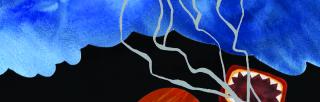
Blixtslukaren
This picture book for three to six year olds is a welcome addition to any child’s bookshelf but to their parents’ coffee table as well.

REVIEW
62 dagar
A masterly portrayal of small, frightened teenage souls trapped in growing, awkward, sweaty bodies.
REVIEW
Resan till världens farligaste land
Inspired by classic stories and computer adventure games.

REVIEW
Arra. Legender från Lavora
Arra has never spoken a word, but has learnt to recognise and sing all the songs of the trees and the river.
Non-fiction
REVIEW
Resan till månen
The growth of filmic art is interestingly if at times slightly arbitrarily explored in this companion text to the exhibition of the same name at Bonniers Konsthall art gallery.
REVIEW
Dag ut och dag in med en dag i Dublin
A collection of Andersson’s reflections on his experiences while translating James Joyce.
REVIEW
Death in a Cold Climate
This book simply had to be reviewed here: not only is this what could quite fairly be described as the definitive book to date on Scandinavian crime fiction in the English language, but it is a work which strongly features the theme of translation itself.
REVIEW
Det enda könet. Varför du är förförd av den ekonomiske mannen och hur det förstör ditt liv och världsekonomin
Thought-provoking non-fiction on how women are left out of the study of economics and human behaviour, and how this affects human understanding of the world economy.
REVIEW
Kunskapen och makten. Om det offentliga beslutsfattandets kunskapsförsörjning
This collection of essays contains something for almost everyone with an interest in the overall theme of making expertise matter without favouring technocratic governance.
REVIEW
Knapptryckarkompaniet. Rapport från Sveriges riksdag
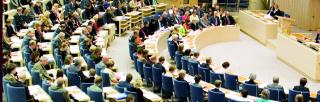
The author’s personal and frankly partisan account of a period as a Member of Parliament.

REVIEW
Sverige forever in my heart
Orrenius is a smart journalist with a keen eye for paradoxes in legal systems and widely held beliefs. He lets people talk freely while he interviews them and, rather than ending an article with his own conclusions, he lets the reader draw their own.
REVIEW
Snuten i skymningslandet. Svenska polisberättelser i roman och film 1965–2010
A great source of information and an articulate companion to crime fiction as a literary genre.