
‘Drama Belongs in the Centre of Literary Life, Not at its Margins’
Hedda Krausz Sjögren on Bringing Drama into the Spotlight at Gothenburg Book Fair
interviewed by Alex Fleming
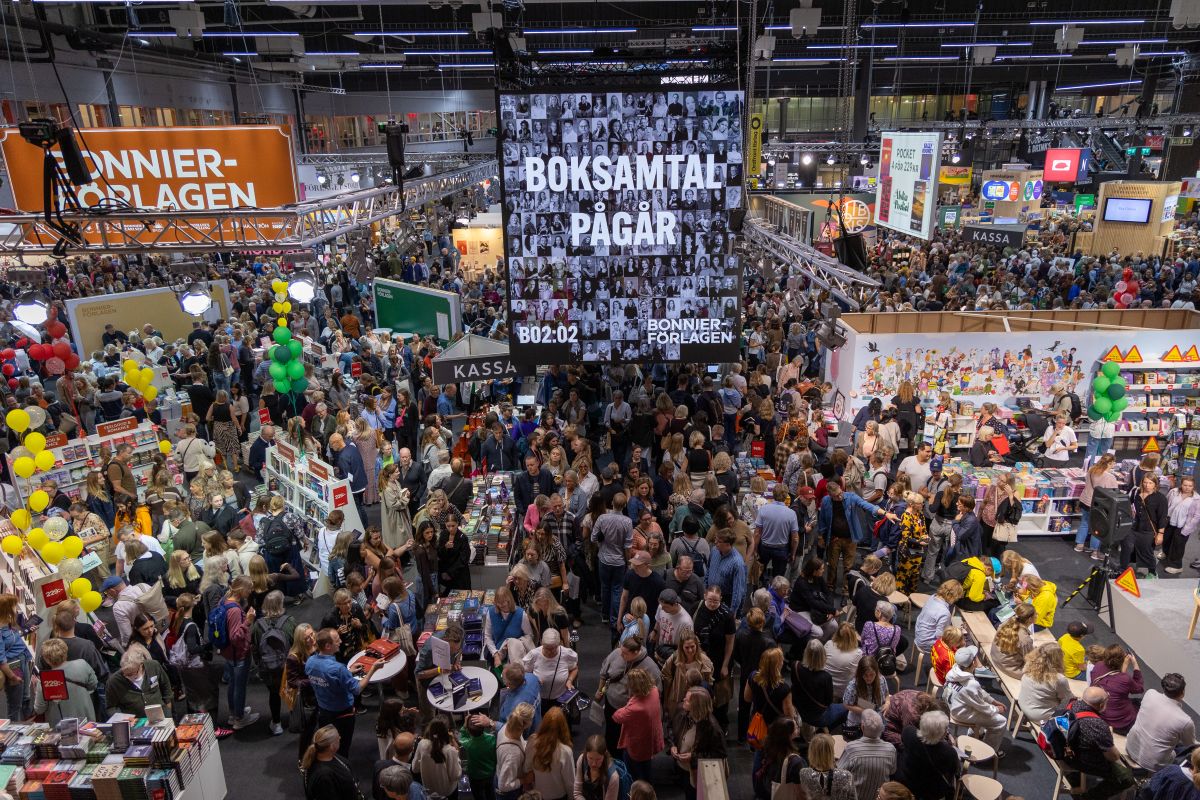
In 2025, drama reclaimed its rightful position at the heart of Sweden’s literary scene when it was highlighted as one of the themes at Gothenburg Book Fair, Sweden’s primary publishing event. For four days thousands of visitors were treated to a wide variety of readings, panels and ‘drama slams’, as participants explored the possibilities of contemporary drama and its role in grappling with the most fundamental of human questions.
One of the driving forces behind this project was Hedda Krausz Sjögren, CEO of Sweden’s Colombine Teaterförlag. Alongside a group of Nordic and Baltic partners, she developed a fair programme that brought drama back into the spotlight.
Some months after the conclusion of the fair, Swedish Book Review spoke to Hedda Krausz Sjögren and two programme participants, playwright Isabel Cruz Liljegren and dramaturg Marc Mathiessen, to take stock of the project and its impact. In this series of interviews, the interviewees discuss their work, burgeoning public interest in the dramatic arts, and the future of theatre in Sweden.
SBR: We’ll start at the beginning: How did the drama focus at the bookfair come about? How did you go about coordinating such an ambitious international collaboration?
Hedda Krausz Sjögren: It really started from a kind of quiet irritation. Drama is one of our oldest literary forms, yet it often ends up floating between worlds. It is not fully claimed by publishing, and it is not always treated as literature within theatre structures either. At Colombine we live inside that paradox every day, because we work with plays as texts first, even though they eventually become performances.
So when the possibility arose to shape a major programme at the bookfair, it felt like the right moment to say something very simple: drama belongs in the centre of literary life, not at its margins.
From early on, we knew it had to be international in a real sense. The programme grew into a Nordic-Baltic collaboration with strong European connections rather than a purely national showcase. In the end, nearly one hundred playwrights and dramaturgs from across Europe were present at the fair. That created an unusual density of exchange. Conversations that normally unfold slowly over time were suddenly happening all at once in the same corridors.
One important starting point for the curation was an open call. We received well over three hundred proposals from theatres, organisations, writers, and networks. That material, together with suggestions from our partners, became the foundation for shaping the programme. It meant that the focus did not emerge from a single institutional perspective, but from a broad field of artistic practices and questions that people were already working with.
Coordinating everything was ultimately about trust, long relationships, and a clear curatorial spine. We kept the formats relatively simple and worked closely with the bookfair team so that drama became part of the existing ecosystem rather than a separate ‘special event’. In a way, the most radical choice was simply to treat it as literature and to make it visible as such.
In a way, the most radical choice was simply to treat [drama] as literature and to make it visible as such.
The drama thread of the bookfair programme included everything from panel discussions and dramatic readings to so-called ‘drama slams’. Could you tell us a little about how you brought drama into the bookfair space? What did you feel was important to spotlight with your programming?
A bookfair is designed for books, browsing, listening, discovering, meeting authors. Drama has to be translated into that environment without losing its nature. We tried to let it appear in several forms at once, as language, as ideas, and as living expression.
The readings were essential because they allowed visitors to encounter the writing directly, almost in a raw state. The panel discussions created space to reflect on process, politics, and aesthetics. The drama slams made it possible to experience dramatic writing immediately, without the scale or cost of full productions.
What mattered most to me was to keep the focus on the writer. In theatre culture the playwright can easily become invisible behind institutions and productions. We wanted the programme to keep returning to authorship, to the fact that plays are written works shaped by very distinct voices.
At the same time, we wanted to illuminate the ecosystem around the writing, translators, rights structures, commissioning models. Those conditions shape what gets written and what survives.
Some of the most memorable programme formats were also the simplest. One example was a session called ‘What is a line?’. A dramaturg and an actor worked with a single line each from two different plays. By performing and analysing them together, they showed how meaning emerges in the space between the playwright’s text and the actor’s interpretation. It was a very small format, but it captured something essential about the nature of dramatic writing.
This project speaks to drama as an integral form of literature. How do you feel about the current interface between drama and publishing, and do you think this bookfair focus has affected publishers’ attitudes towards drama at all?
The interface is still fragile. Drama sits between systems, and that in-between position creates blind spots. Publishers may hesitate because the market seems uncertain, while theatres often treat the text as an internal working document rather than a public literary object.
Yet something is shifting. There is growing movement between forms. Many writers move freely between prose, stage, film, and audio, and that is slowly changing how publishers think about drama. Adaptation has also become a major point of contact between the literary and performing arts worlds.
The bookfair focus did not transform the landscape overnight, but it made something tangible happen. It created direct encounters between editors and playwrights, between literary agents and theatre professionals. It also allowed publishers to see drama as part of the contemporary literary conversation rather than a niche area. That shift in perception is small but important, because it affects what gets translated, published, and supported over time.
What mattered most to me was to keep the focus on the writer [...], to the fact that plays are written works shaped by very distinct voices.
What was your sense of the public response to the theme at the fair? What most stood out to you, or stayed with you from the fair?
What surprised me most was how receptive audiences were once drama was simply made visible. Many visitors did not arrive as theatre specialists. They came with curiosity and discovered writers they had never encountered before. That told me something important, that drama does not lack an audience, it often lacks the right context.
There was also a very particular feeling created by the sheer number of playwrights present. With nearly one hundred dramatists and dramaturgs from across Europe, especially from the Nordic and Baltic regions, for a few days the fair became an unusually concentrated meeting place for contemporary dramatic writing. You could feel that density everywhere, in spontaneous conversations, in the queues after readings, in the sense that people were encountering one another across borders and traditions.
What stayed with me most were the quiet moments. When a reading made a busy exhibition hall fall completely silent, or when a conversation about writing suddenly became deeply personal in the middle of a trade fair setting. Those moments felt like small reminders of why this work matters.
As the driving force behind this project, but also through Colombine teaterförlag’s day-to-day work, you have a unique insight into the current landscape for the performing arts in Sweden. What do you feel are the greatest challenges now facing drama, and what areas are thriving?
The greatest challenge is structural sustainability. Theatre institutions are under pressure, financially and politically, and when resources tighten the system tends to become cautious. New writing requires time, dramaturgical support, and commissioning models that recognise the value of the writer’s work. Without those conditions, the pipeline of new plays becomes fragile.
Visibility is another challenge. Playwrights are still not always clearly credited in public communication, which affects how the wider public understands drama as a literary form.
At the same time, there are many areas of vitality. There is a remarkable generation of writers working across forms, moving between stage, prose, film, and sound. International exchange within the Nordic region is strong, and there is growing interest in translation and circulation beyond national borders. Adaptation is also thriving, which can become a powerful bridge between literary and theatrical worlds if it remains a genuine dialogue rather than a one-way extraction of content.
Many writers move freely between prose, stage, film, and audio, and that is slowly changing how publishers think about drama.
Some months on from the fair, what do you feel its legacy has been? And what’s next for Colombine teaterförlag?
If there is a legacy, I think it lies in perception and relationships.
For a brief moment, drama was not treated as a specialist corner of the cultural field. It was present at the centre of a major literary event, visible to publishers, readers, and international partners. That shift in framing has practical consequences, because it influences who gets invited into literary spaces and whose work is translated and discussed.
The second legacy is the network that emerged. Bringing together so many playwrights, dramaturgs, translators, and institutions in one place created connections that will continue to shape collaborations in the coming years.
As for Colombine, our focus now is on strengthening the infrastructure around drama, especially international circulation and translation pathways. We are also working with digital systems that can automate routine administrative tasks, allowing more human time to be devoted to curatorial and artistic work. The guiding idea remains very simple, that contemporary drama is a major literary form and deserves to be treated with the same seriousness as any other part of the literary landscape.
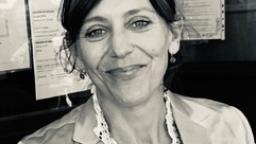
Hedda Krausz Sjögren
Hedda Krausz Sjögren is CEO of Colombine Teaterförlag, the leading Nordic agency for contemporary drama and performing rights, where she works with some of the region’s most prominent writers, including Jonas Hassen Khemiri, Jon Fosse, Sara Stridsberg, and the estate of Henning Mankell. She has curated international programs such as the drama focus at the Gothenburg Book Fair and writes regularly on international cultural relations, and the intersections between the arts, public life, and societal resilience.