

2009:2
Fiction by Sven Olov Karlsson and Birgitta Stenberg
Editor: Sarah Death
Deputy Editor: Neil Smith
Reviews Editor: Henning Koch
(Image: The antenna at Esrange Space Centre. © Swedish Space Corporation/imagebank.sweden.se)
Some of us were lucky enough to be at the Edinburgh International Book Festival this August as the long-nurtured project to feature a cross-section of Swedish writers in its 2009 programme reached fruition (see page 60). The Swedish group was certainly a diverse one, containing everyone from essayists and poets to an internationally famous crime writer. Writing in The Guardian a few days later about the event as a whole, Alan Bissett reported that Scottish author James Kelman had lambasted his country’s literary establishment during the Festival for ‘the crime-ification of Scottish letters’ and for praising mediocre commercial fiction. Bissett saw this as ‘a manifestation of the old "genre v real literature" debate’, but urged writers such as Kelman to keep speaking out for new ways of expressing and thinking about ourselves. A similar literary debate is ruffling feathers in Sweden this autumn, following the publication by seven relatively young writers of a ‘Manifesto For a New Literary Decade', humorous in tone, but keen to promote discussion of, to take one example, the extent to which epic storytelling has been annexed by crime fiction and so-called chick-lit. The document prompted a counter-manifesto signed by no fewer than 32 other writers, and many column inches ensued from both sides of the debate. As author of this year’s edition of the annual literary round-up New Swedish Titles (shortly available in English on the Swedish Arts Council website), Annina Raabe sees the debate in positive terms: ‘Whatever else we may conclude from the manifesto and its aftermath, it certainly indicates one thing: young Swedish writers of today are not lacking in literary awareness, and are more than ready to get involved in heated debates about what is possible in literature.’ In this issue of SBR we are unashamedly helping ourselves from both sides of the arena. With the authors’ permission, we are pleased to bring you, as an SBR exclusive, an English translation of the manifesto. We also feature an extract from the work of one of the manifesto’s signatories: Sven Olov Karlsson’s The American House brings us traditional storytelling at its best. As the British bookselling community winds itself up for the imminent release of the third and final part of Stieg Larsson’s Millennium trilogy, The Girl Who Kicked the Hornet’s Nest, we give our own nod to the crime fiction genre with an extract from a new work by Anna Bovaller. Also to be sampled in this issue: the brittle despair of a woman acting out the roles of wife and mother in a disintegrating marriage in an extract from Kristina Sandberg’s latest novel; and the enduringly popular memoirs of a happy-go-lucky, young Swedish woman by the name of Birgitta Stenberg, abroad in the 1950s, socialising with Robert Graves and his circle in Majorca. To complete the cocktail we bring you quirky verses and wacky illustrations by the team of Stella Parland and Linda Bondestam, in the nonsense tradition of Edward Lear and Dr Seuss.
Translations

TRANSLATED EXTRACT
from The American House by Sven Olov Karlsson
The demoralised and run-down former industrial town of Eriksfors is the atmospheric setting for a revenge drama in Sven Olov Karlsson's second novel.
Translated by Neil Smith
TRANSLATED EXTRACT
from All the Wild Ones by Birgitta Stenberg
The penultimate volume in Birgitta Stenberg's suite of autobiographical novels, 'Love in Europe'.
Translated by Henning Koch
Reviews
Edited and compiled by Henning Koch
REVIEW
Is och vatten, vatten och is
This novel confirms Majgull Axelsson’s position as one of Sweden’s most interesting and accomplished contemporary storytellers.

REVIEW
Struggling Love
Staffan Bruun's novel, bearing on its cover the description ‘Burt Kobbat on the hunt for a missing Beatles tape’, should find a ready market in the English-reading world, and not only among lovers of contemporary crime fiction.
REVIEW
En vass obändig längtan. En norrländsk roman
Marianne Jeffmar's novel tells the love story of Johan and Brita who meet each other in a vicarage in the northern province of Ångermanland in the 1920s.
REVIEW
Jag vill inte tjäna
Ola Larsmo believes that the novel can be an effective vehicle for tackling painful conflicts, cover-ups and scandals in ‘the recent past.’ His own contribution to the genre is about misogyny and prostitution seen through the eyes of a physician in nineteenth-century Uppsala.
REVIEW
Den orolige mannen
Henning Mankell's outstanding detective continues to perform in this novel, but the real subject matter – the troubled man of the title – is Wallander as a person rather than as a police officer.
REVIEW
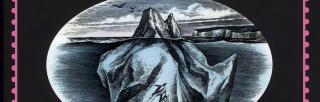
Mitt liv som pingvin
Katarina Mazetti's social-conscience-laced comedy shows that love between two people is not instantly recognisable but can look like just about anything, and human beings are like icebergs, nine-tenths hidden beneath the surface.

REVIEW
Den falske vännen
Henrik Nilsson's clever and stylish debut novel offers us an exciting, multi-layered tale set in fin de siècle Vienna, in which books are the real heroes and Vatican bankers and Papal conspiracy theories have to take their allotted place in the literary jigsaw.

REVIEW
I den innersta kretsen
There can be few more appealing places than the Stockholm archipelago on a beautiful summer’s day. In this novel Viveca Sten once again takes the reader into the heart of the community on the island of Sandhamn.

REVIEW
En lycklig liten ö
Lars Sund’s latest novel will provide book circles everywhere with endless hours of fun and games, and they will be amply rewarded, for this is the work of an unusually gifted novelist writing with confidence, playfulness and subtlety.

REVIEW
De vackra kusinerna
The unique thing about Mikaela Sundström is the style of her writing. Reading her novel is like meeting a gossipy neighbour after coming back to your home town, who wants to tell you everything about everybody, leaving you amused, confused and quite possibly, misinformed.
Fiction for children and teenagers
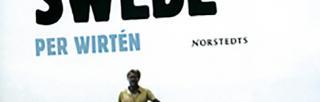
REVIEW
The Crazy Swede: en sann historia
Per Wirtén's journalistic account of maritime adventurer Anders Svedlund's life.