
from Eva-Lisa’s Monument
by Sam Hultin
translated and introduced by Jane Davis
In 2016, a chance encounter brought artist Sam Hultin into contact with Eva-Lisa Bengtson, a trans pioneer who had compiled a unique archive of photographs, letters and other documents narrating the Swedish LGBTQ movement’s history – one of which few people are aware.
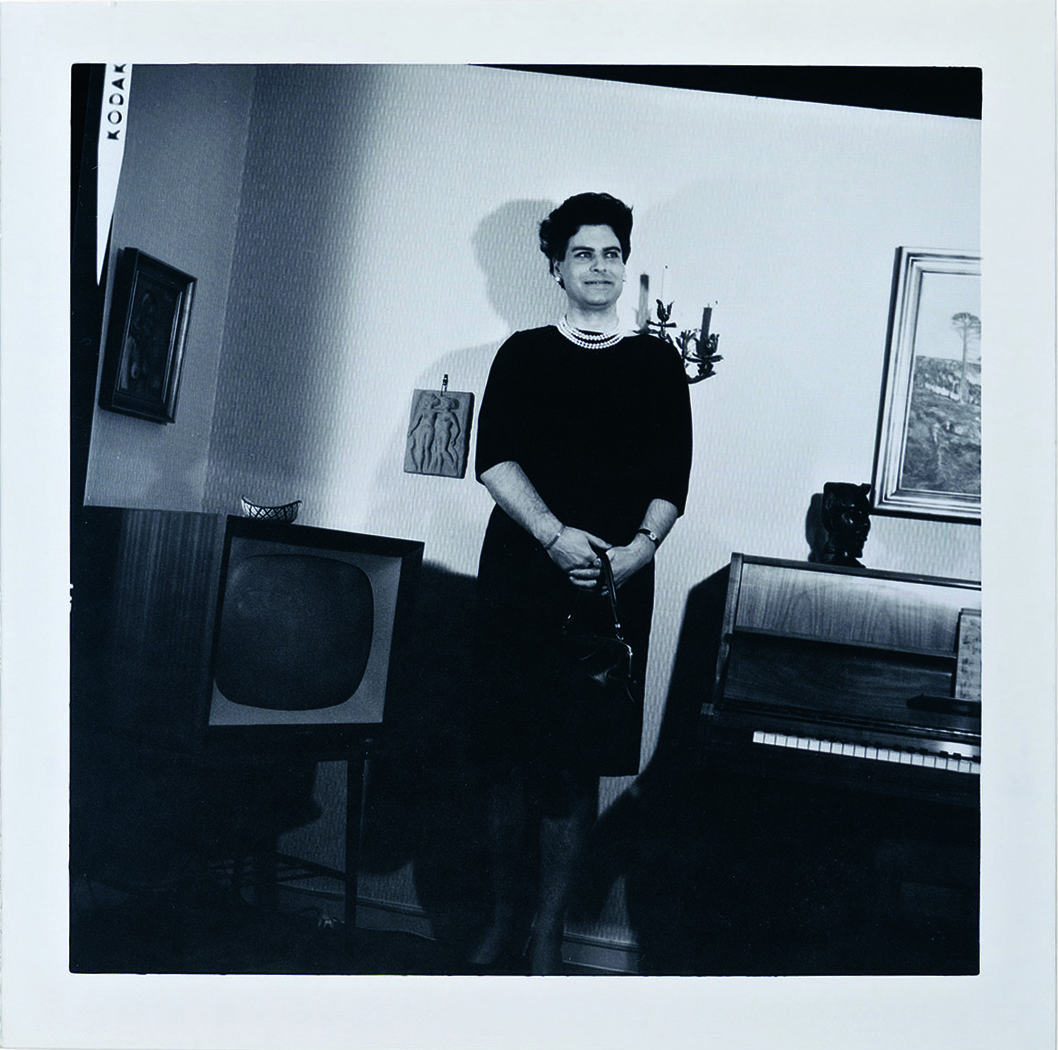
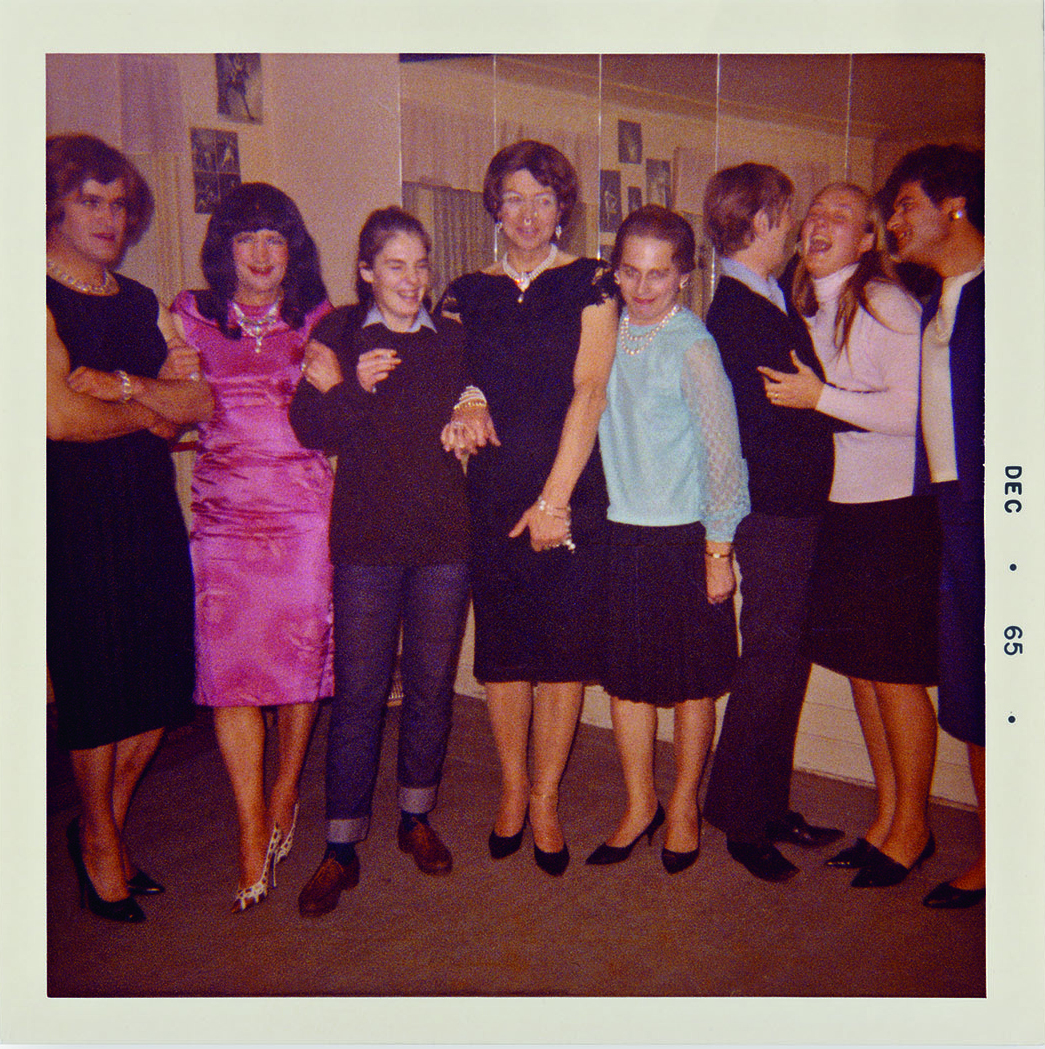
In Eva-Lisa’s Monument, Hultin reveals this history through the prism of Eva-Lisa’s life, in a series of beautifully laconic episodes. The extract published here covers the period from her discovery of her real name at the age of four through the tribulations and joys of school, and includes images from Eva-Lisa’s adult life.
Throughout the book, we witness Eva-Lisa’s struggle to understand and explain her identity to herself and to those around her – but also the recurring waves of bias and fear emanating from both outside and within the growing LGBTQ movement.
We also gain a shocking insight into human rights legislation in Sweden, a country widely considered to be amongst the most liberal in the world. In 1972 Sweden was indeed the first country in the world to allow individuals to officially change their legal gender – yet it was only in 2013 that they were not first forced to undergo sterilisation.
Eva-Lisa’s Monument is compelling reading as a biography, but perhaps even more so as a reminder of how recent – and how fragile – are the human rights granted to LGBTQ individuals.
from Eva-Lisa’s Monument
NEAR BORLÄNGE
1936
The four-year-old meets her own gaze in the mirror, then allows it to wander over the pearl necklaces, the earrings that reach down to her shoulders and the pale green dress with the lace trim. She admires the high heels and the bracelets that jangle when she carefully pulls up the large gloves. The tiara with glass beads that rests on her dark curls is the most beautiful thing she’s ever seen. She twists and turns so she can see herself properly, taking it all in. At home she often borrows her big sister’s clothes, but this is something really special. She almost doesn’t recognise herself. Or is it rather that she does? The two teenage girls also seem happy with their creation, and call the adults to come and see.
All day, the family has been travelling in the Volvo truck with the new engine that Father invented. They’re visiting his boss, and the big house is something very different to their flat at home in Kristineberg. Two whole storeys for just one family! The teenagers’ room is full of things big girls have, which you can look at and even try out if you’re careful.
The four-year-old has long understood that she’s expected to wear boys’ clothes, and not her sister Birgit’s outgrown blouses and cardigans, which she prefers. She doesn’t remember anyone saying it outright, but it’s the kind of thing you just understand. And when the adults look into the girls’ room now they laugh kindly, but she hears that thing in her father’s voice. That touch of embarrassment.
‘Well now it’s time for all the youngsters to go to bed. Birgit, help your little brother to take all that off!’
The adults leave, and the girls begin doing something else. But the four-year-old stays by the mirror. This is too important to brush aside. She looks herself right in the eyes, absorbing the image. That’s her. Just think! A real girl. Eva-Lisa. She doesn’t say it aloud, but she thinks it. And inside her the name rings as clear as a bell. It takes root in her chest and spreads like a pressure wave, vibrating through her entire body. Eva-Lisa. From now on, that’s her real name. For many years she will keep it to herself, but all the same. She knows it now, with absolute certainty.
STORA SÖDERGATAN, LUND
DECEMBER 1939
Despite all of the stoves being lit, the winter cold has invaded the flat. Eva-Lisa and Birgit have laid out cushions on the living room floor so they can be as close to the radio as possible. They’ve been glued there almost every evening since Germany invaded Poland and the new world war became a reality. Now that Russian troops have entered Finland the threat is very close, and the siblings follow every new report with great attention.
They have moved from Stockholm to Lund because of their father’s job at the engineering company Bolinder-Munktell. It’s also through the company that they have been able to rent the large flat near Stadsparken with windows that must be covered with blackout curtains every night. Both German and British planes fly over the city, and whenever the air raid siren goes they all have to run down into the cellar. There they sit with all the other families in the building and wait for the All Clear.
Eva-Lisa has started Year 3 in this new city. Although she’s a newcomer and doesn’t talk like the other children, she’s happy. Only a few times has she heard children shout Jew after her. She knows it’s because of her dark hair, and perhaps also a bit because of her Stockholm accent. But she can impress the others by skiing down the high snowbanks that edge the streets in this cold winter. Not everyone dares to do that.
Now she’s sitting in front of the radio with her sister, listening. The report is about the Finnish refugee children who are being moved to Sweden. Tens of thousands of children have already crossed the Gulf of Bothnia by boat and been placed with Swedish families, and on several Sundays Mother, Birgit and Eva-Lisa have gone out with tins, collecting money for the Finnish Aid Society.
‘Birgit, come and help with the dishes!’ comes Mother’s voice from the kitchen.
Her big sister doesn’t react. She wants to hear the rest of the broadcast. But when Mother shouts again, now in a sterner tone, Birgit gets up and leaves Eva-Lisa alone in front of the radio. And that’s when it happens. Amongst all the news about the war, the newsreader talks about how the police have arrested a man dressed in women’s clothes. It’s a short piece, and it isn’t clear what actually happened. It isn’t even clear whether the man committed any crime. But that question is overshadowed by the mention of the clothes – the detail the journalist seems to feel so worthy of attention. At first Eva-Lisa thinks this news seems insignificant compared to the war. How can people talk about such things when the Germans or Russians might arrive any day? But then she begins to wonder about the man. The newsreader continues with the report, but his voice seems to fade away even though she hasn’t altered the volume. The man with women’s clothes. He really exists somewhere. Somewhere out there, perhaps even in Lund. And that means there may be more people like him. Like her! The strongest feeling that now washes over her for the first time, and which stays with her, is one of recognition, of kinship. A realisation that perhaps she isn’t alone.
SKÄRSÄTRA SCHOOL, LIDINGÖ
SEPTEMBER 1942
Eva-Lisa walks down the corridor. The PE lesson is finally over, and now there’s only an hour of maths left before she finally gets to go home. Home from the ‘snob school’ as she calls it to herself. She doesn’t like it at all. Partly because the boys and girls are separated, so she always has to be in the boys’ class. But mostly because she hasn’t found a real friend yet, even though they moved there almost a month ago. After Lund the family lived in Hässleholm and Kristianstad, and each time it went the same way. She and Birgit had just got to know their new classmates when their father announced that he had a new job in a new town. At least this is a well-paid job at the state-owned gas company in Stockholm, and it seems like this time it will be for longer. Petrol is in short supply due to the war, so alternative methods have had to be found to keep the country’s transport running. With a producer gas unit, everything from trucks to motorbikes can be run on wood or charcoal. Father’s important task is to make them safer and more effective. His new, higher salary has made them better off, and Mother and Father have said several times that they’re very lucky to live in such a nice place as Lidingö. But despite that Eva-Lisa isn’t happy, particularly not at school. It’s like there are lots of secret rules for how you’re supposed to behave. Like she’s supposed to want to play with the boys. Or to choose woodwork instead of needlework. She thanks her lucky stars that she retained her Stockholm accent and never let the rolling r of the Skåne dialect embed itself in her tongue.
In PE they’d played football and as usual she’d been picked to play in goal. The boys had joked that ‘at least fatty fills up the goal a bit’, and Eva-Lisa hadn’t said a word. Exactly as she always does, she pretended she hadn’t heard. With time she’s got better at shutting out the voices. Almost as if there’s a button she switches on so she doesn’t hear. As she walks past a group of girls in Year 8 she thinks that she still doesn’t want to be with the boys. She doesn’t want to be with anyone. This is a shitty snob school. It feels good to think the forbidden words. Bloody, bloody, piss pants school. Damn pissy snob school. She’s just passed the girls when she hears someone say, quietly but audibly, ‘Hello Piggy.’ They giggle. Eva-Lisa stops. She knows it’s the nickname some of the boys in her class have given her – and now it’s clearly spread. Her tongue feels sticky. She clenches her fists. Fucking school. She turns to the group. It’s just her and them in the corridor now.
‘Fatty!’ shrills one of the girls.
Her heart is thudding. Fucking shitheads, she thinks. And then she takes a deep breath.
‘FUCKING!’ Eva-Lisa shouts.
The word comes out at full volume and bounces off the walls, filling the corridor. But then it falls silent. The word “shitheads” doesn’t follow it. Panic rises in her chest. It’s like a nightmare, when you have to shout something but you just can’t make a sound. Her throat is dry and her cheeks hot. Someone sniggers. And now she feels it: if she opens her mouth she’s going to start crying. And that absolutely mustn’t happen. So she holds her breath, turns and sprints along the corridor to the stairwell. Through the door, down the stairs, down to the cellar. Right at the bottom, by the cellar door, there’s a little space where almost nobody goes. She’s been there before. She curls up into a ball. The crying begins as one long wail, but soon turns into sobs. The tears run over her mouth and chin, dripping onto the stone floor. Her breaths become uneven and she has to cough away mucus that’s gone down the wrong way. She sits there in silence for a while, squeezing out the last of the tears and snorting back the snot. She dries her face with her shirt sleeve. Now she hears the bell ringing. For the first time ever she’s going to skip a lesson. Shitheads, shitheads, shitheads.
KOTTLAVÄGEN, LIDINGÖ
OCTOBER 1942
On the way home from school, someone runs to catch up with Eva-Lisa. She hears the rapid footsteps drawing closer on the gravel. She tenses her whole body, quickly looking around to see where she can run if she needs to. But no, it’s already too late. She steels herself and whirls around. It’s one of the girls from Year 8.
Eva-Lisa has noticed that the girl takes the same route home from school as she does, and realised that she must live just a few houses away. Eva-Lisa has done her best to avoid her. She doesn’t want to risk being bullied outside school too. And what if Father or Mother saw? She’d never tell them such a thing.
‘You’re Birgit’s little brother, right?’
The girl looks at Eva-Lisa’s house. Eva-Lisa doesn’t know what to say. She just wants to get out of the situation as fast as possible. She knows she looks stupid, just standing there staring.
The girl carries on. ‘When the Ragnarssons lived there, we were allowed to go in and pick blackberries.’
Eva-Lisa and Birgit have picked and eaten the sweet dark berries almost every day for two weeks. At first Mother made several batches of jam, but sugar rationing means the children can help themselves to the surplus now.
‘Shall we go in and do that now?’ asks the girl.
What should she say? Is it a trap? Or is it actually an attempt to be friendly? The girl isn’t with her friends now – there’s nobody around for her to impress. Eva-Lisa takes a chance.
‘Yes, we could do.’
Together they go past Father’s workshop and around the red house with the veranda, over to the corner in the back where the bushes grow. Eva-Lisa lifts up a trailing stem so the girl can see how many berries are hiding underneath. She crawls in and comes out with a whole handful. They challenge each other, seeing how far they can get in beneath the bushes without catching themselves on the thorns, and after a while it feels natural. The girl has now introduced herself as Kerstin, and she tells Eva-Lisa which of the neighbours have fruit trees, which ones let you go and pick apples or plums, which ones you can easily pilfer from and which ones you should avoid. She talks about the nasty old man with the dog, and the boy on the other side of the block who’s spent half of his life in prison and who everyone calls the Madman. They eat and they pick, they squash the berries between their hands to get out the juice that looks like blood, and Kerstin paints first her own lips and then Eva-Lisa’s with a berry. She carefully sets it down on her imaginary dressing table, tilts her head and makes her voice sound like that of an elegant lady.
‘Do you think I’m beautiful, Mrs Bengtson?’
‘Oh yes, Mrs Jönsson! Absolutely beauuuutiful!’
After that day, Eva-Lisa and Kerstin are almost inseparable, including at school. Although they never mention what happened after the PE lesson, Eva-Lisa soon feels like part of Kerstin’s circle. They walk to and from school together, sit next to each other at morning break time, go sledging in the winter and play tag in the warmer months. Getting to be one of the girls feels right and normal, and soon nobody questions her role in the group. The only people who get cross with her are the boys. They stare at her and shout ‘Charmer!’ when there are no adults around. But despite the scornful tone it doesn’t bother her. Now she’s safe, protected by the strength of the group. By Kerstin and the others. And anyway, she doesn’t think it sounds too bad to be a charmer. Someone who can charm girls. A charming girl.
SKÄRSÄTRA SCHOOL, LIDINGÖ
7 MAY 1945
What’s going on? Mr Ström almost looks like he’s about to start crying, even though he’s smiling as he stands outside the school building with the headmaster and another teacher. The last lesson of the day is about to begin, but several pupils are just standing in the school playground.
‘Everyone go to the steps at the end!’ he shouts, pointing to where they should go.
Eva-Lisa soon finds Kerstin in the sea of children gathered at the bottom of the steps where the headmaster and a few teachers have now assembled. They wait for the final pupils. And then the headmaster waves them all to silence.
‘Colleagues and children! We have just been informed that the Germans have capitulated. The war is finally over. There is peace in Europe!’
The children cheer and the teachers clap. A few of the older pupils are so excited that they begin to sing the royal anthem. The teachers try to silence them, but when the pupils hear that they have the rest of the day off they can’t be stopped. It’s too good to be true. What with the peace, the approaching summer and the sudden freedom, the children rush out of the playground, and on the way home Eva-Lisa and Kerstin happily greet everyone they meet. All the adults also seem to be exhilarated by the news. They return the greetings and joke with the children strolling home in the May sunshine.
LIDINGÖ UPPER SECONDARY SCHOOL, LIDINGÖ
JUNE 1948
‘And who are you?’
The tired photographer looks suspiciously at Eva-Lisa and the girls, who have lined up in three neat rows.
‘I’m the break monitor,’ Eva-Lisa replies.
The others keep straight faces. Eva-Lisa gives her most reassuring smile, forcing herself to meet his eyes. The photographer sighs.
At secondary school the boys and girls are still separated, but Eva-Lisa has continued spending time with the girls two years above her throughout her time there. Not only during breaks, but outside school too – they walk home together, she’s invited to sewing circles and goes to the cinema with them. In the last year, Eva-Lisa has also been given the task of break monitor, a duty that has made it possible for her to hang around with them even more. It was Greta, one of Kerstin’s best friends, who suggested that they try to get Eva-Lisa into the photograph too. ‘He’s pretty much in our class anyway!’ she’d said at morning break the day before. And anyway, it was their last school photo before graduation. It would be their last chance. Everyone had agreed. So there had been a secret agreement between her and her friends.
‘Okay, well go over on the edge there.’ The photographer waves his hand to show where Eva-Lisa should stand.
She glances at her friends, who look back neutrally, careful not to reveal their thoughts. She hurries to stand next to Greta, at the far end of the middle row, a little more at an angle to the camera than the others. Tidying her hair, she smiles, neatly lined up with the others. A girl amongst girls. A charming girl.
‘Everyone look at the camera! Stand still and smile! One, two, three!’

Eva-Lisa’s Monument
Brombergs, 2025, 350 pages.
We are grateful to Sam Hultin for granting permission to publish this translated extract.
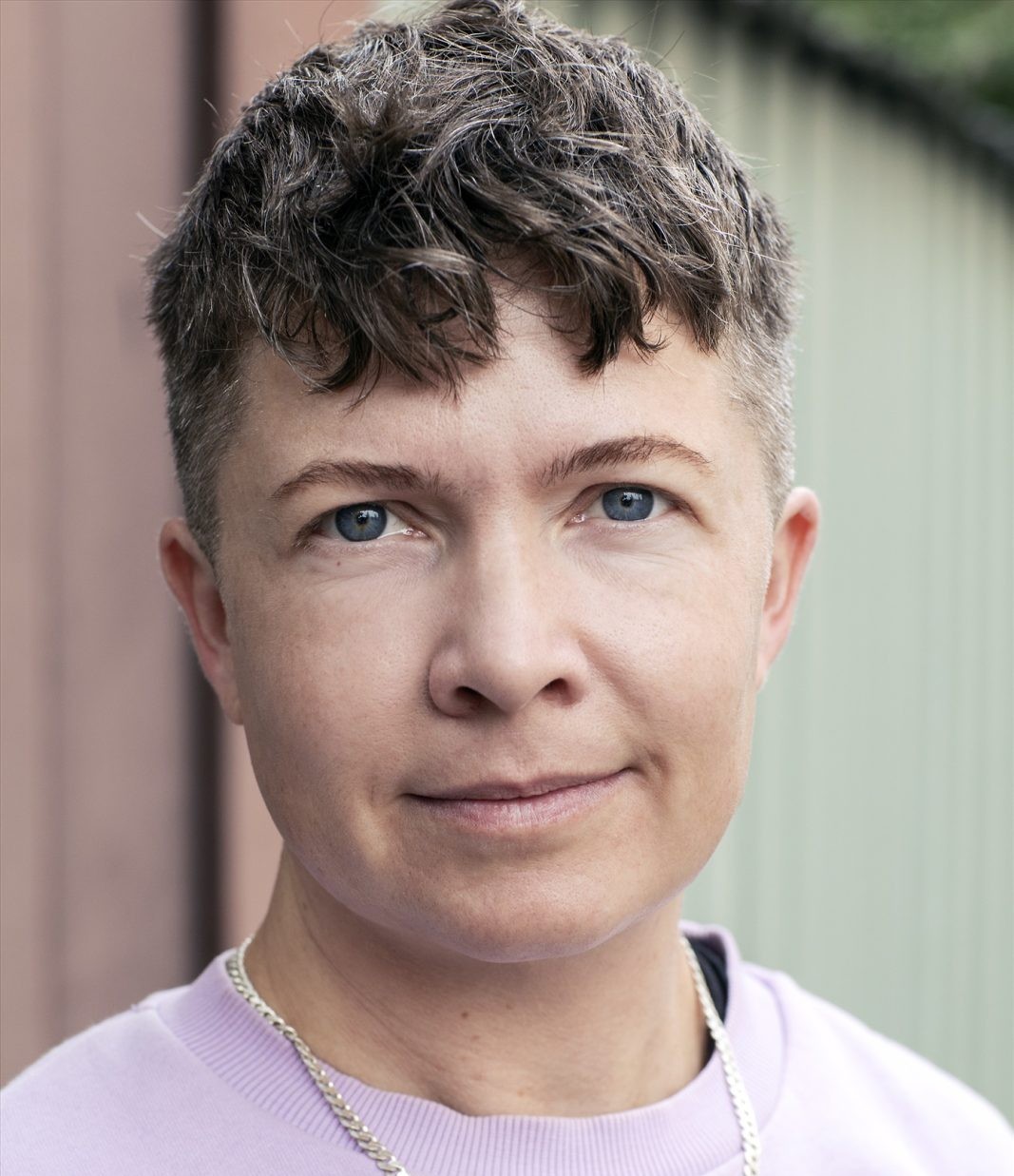
Sam Hultin is an artist based in Stockholm. Their work is based on their interest in queer history, identity and community and explores connections between personal experiences and political and social structures. Sam's work is represented in the collections of Moderna Museet, Stockholm, Statens konstråd, Gothenburg Museum of Art, Gotlands konstmuseum and Malmö Art Museum.
Jane Davis is a literary and commercial translator from Swedish, French, Norwegian and Danish to English. When not translating, being a cat servant or finding ways to outwit zombies, she currently spends her time wandering through Swedish forests thinking about how to create music using code.