
from Lost Ground
by Frans Wachtmeister
translated and introduced by Alex Fleming
Frans Wachtmeister’s second novel opens at a moment of crisis for its protagonist, a European resident in Japan. With his career in recruitment languishing in the aftermath of a break-up, he is given three months to turn things around or else lose his job – and with it his visa as a ‘highly skilled foreign professional’ in the country. As his Tokyo existence gradually crumbles around him, his vision of the city on which he has built so much of his identity starts to morph, driving him to increasingly desperate measures.
Wachtmeister, who himself has been based in Tokyo for over a decade, writes compellingly on complex dynamics of integration, the contradictory politics of migration and exploitation, and relationships between Japan and the West. With humour and light laconicism he captures a pompous, multifaceted protagonist trapped between his own cynical, recruitment-informed gaze on human value, power and status, and his desire for belonging and connection. The result is an absorbing and stylistically biting take on assimilation, power and identity, from an exciting new voice in Swedish literature.
This excerpt is taken from the start of the novel, after the protagonist has been forced to attend a remedial training course in an attempt to stoke the embers of his flagging career.
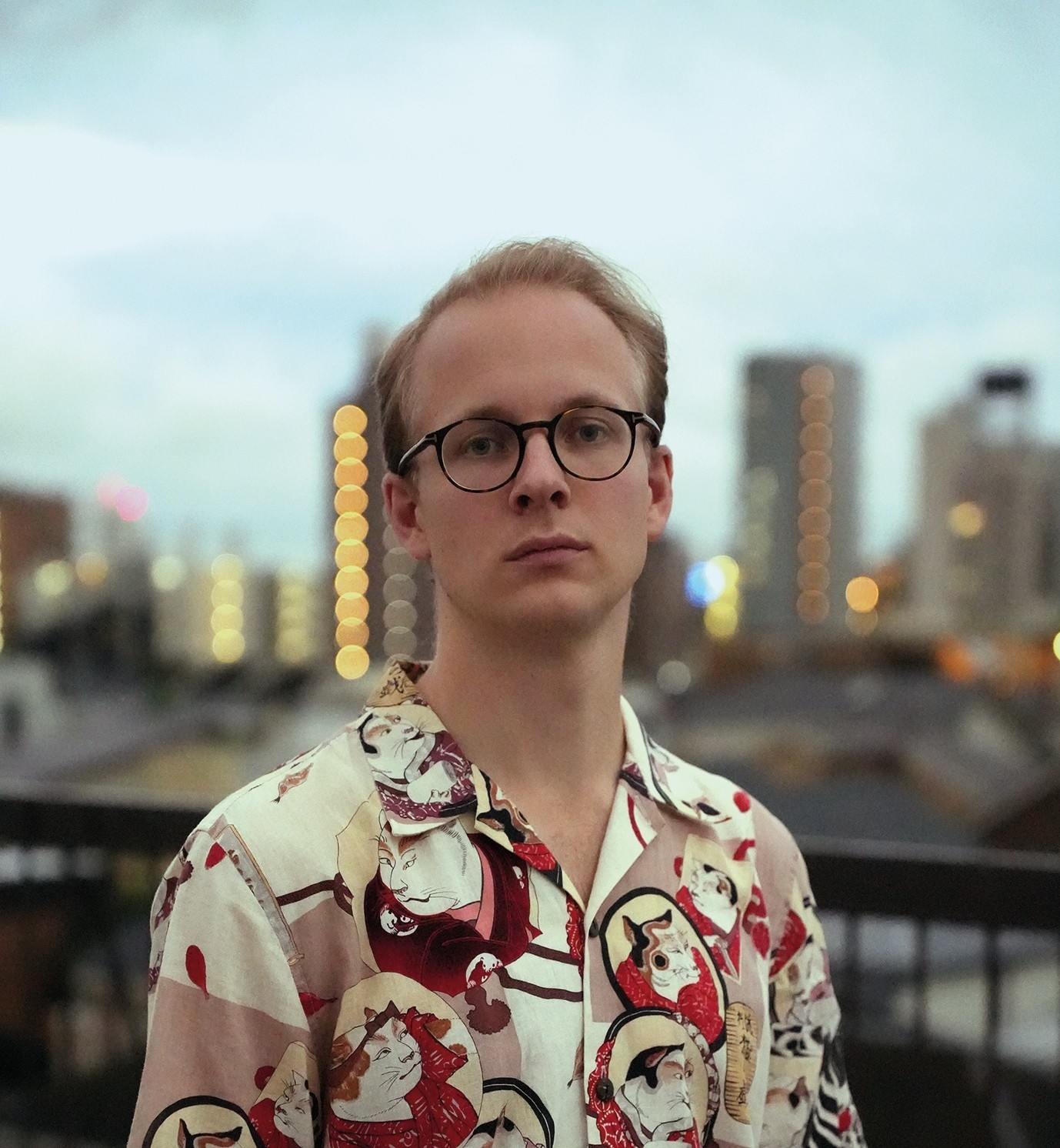
from Lost Ground
At seven o’clock I dumped my coat on the floor of the hallway in my flat. It was definitely a rare thing in my industry to get home that early, but Diehl, master of time management that he was, had ended the training session almost exactly at six. In my case the correct course of action would probably have been to go back to my desk and get down to work, but instead I sneaked home, luckily enough without bumping into any managers.
I lived in Setagaya, a calm, upscale residential district of western Tokyo. My apartment was on the ground floor of an older building, one of the first blocks built after the war and the only apartment complex on the street. From the outside it was no sight to behold: the façade was covered in algae, the plasterwork full of cracks. At first glance it called to mind a condemned building. (Which it probably would be before long; the Japanese just love to tear down buildings, it’s almost a national sport. When a plot changes hands the first thing the new owner does is call in a team of central-Asian workers armed with hammer drills and hydraulic cutters. A couple of competent Uzbeks will have a wooden house flattened within a morning.) On the inside it was much better. The landlord, a former ceramicist by trade, had spent time there before and had converted the spaces into a studio. So the décor was in a kind of Zen-Buddhist style, complete with shoji screens and wooden panels on the walls. Rice-straw mats on the floor. All very beautifully done, fabulously appointed as an estate agent would say. On one wall there was even a small alcove, and the terrace fed onto a communal garden not entirely unlike the rock garden at Ryoanji. The rent was a fair bit under the going rate for the area, since it had been basically impossible to find a tenant: the modern Japanese preferred bright new-builds; the aesthetics of Junichiro Tanizaki’s In Praise of Shadows hadn’t survived Ikea. Besides, the landlord insisted on the flat being rented by a couple. A status I’d enjoyed at the time.
The paraffin heater roared when I turned up the heat. I’d had to bundle myself up in my coat again. It must have been the coldest night of the year. The Japanese could make beautiful constructions, but they had never learnt the art of insulation, and I refused to install AC: a Panasonic on the wood-panelled wall would compromise the overall look. When it came to aesthetics I was a puritan. Only an old-fashioned, cast-iron paraffin heater – deadly if carelessly used – was consistent with the wabi-sabi ideal that I strove for in my home.
I treated myself to a little Suntory time while trying to keep my thoughts vaguely clear and positive. It was the twenty-seventh of December. Two more days, then a week’s much-needed break. Two days wasn’t long; I was sure it would pass by quickly. Then a new year would be upon us. New opportunities. New candidates to send out, new roles to fill. The start of the new year, once the alcohol was gone and the angst had set in, was the busiest time for job applications. Job sites were even known to crash from time to time. I’d already placed my job ads, so the next day I’d rig up some other nets and after the holidays it would just be a case of hauling in the catch. A broad portfolio of candidates would be my salvation. I would get out of this.
The whisky was getting low. Still, six months without a sale must be a record. That I hadn’t already been sacked was actually pretty wild. Normally you’d be kicked to the kerb after two, three zeroed months, max. Takahashi must have really fought for me tooth and nail. And even if – as Genzo pointed out – that was just because I was a foreigner, I had only to graciously accept. (After all, what didn’t I have my status as foreigner to thank for in this country? Presumably very little.) Genzo could go to hell. It wasn’t my fault I enjoyed benefits based solely on my ethnicity.
But sadly my ethnicity alone would no longer cut it, as was made only too clear the next day. Takahashi had given me a new assignment to work on, a managerial post at a metal factory. (After months of badgering he’d persuaded the previous manager to move to a German industrial giant to sell wind turbines instead.) It should have been simple; a chimp could find applicants for a position like that. Who didn’t want to be a manager? In my prime it would have taken me no more than a week to close the deal.
But it just wasn’t happening, in spite of Diehl’s sales training. Perhaps it was the season. New Year’s is Japan’s most important holiday. Many were already off work, and I was clearly disrupting their leave with my cold calls. No one wants a call from a random salesperson at seven-thirty in the evening, certainly not two days before the year’s biggest celebration. Most people didn’t pick up, and the ones who did either hung up straight away or told me where to go. I could sympathise with both.
The only thing for it was to keep calling; buy an energy drink from the machine and keep plugging away at it until someone said yes. Takahashi had his eye on me. On me and on my numbers, which anyone could peruse on the intranet. At any given point he could go into the logs and see exactly what I was working on, so no matter what, I had to reach my daily KPI of a hundred calls. Then if I couldn’t rustle up a candidate I’d at least be able to show I’d made a valiant attempt. It was almost seven, but my numbers were still in the red. Going home before they flipped to green was unthinkable: I’d had to promise as much to Burrows earlier that morning when I got into work. Me slinking off home straight after Diehl’s course the night before hadn’t gone unnoticed.
The time got to nine-thirty. The office was empty, save for a cleaner busily tearing down the Christmas decorations from the windows. Outside them Tokyo twinkled, brilliantly crisp in the icy night. I tapped in the number of my last phone call of the day. Taro Tanaka. The call rang through. Some part of me hoped Tanaka wouldn’t pick up, since then I could go home. A subdued moshi moshi shattered those hopes. I swallowed my Red Bull and ad-libbed a passable sales pitch for the position at Masuda Steel: salary; status; power. Most people crave one of the three. Fascinating, how the desires of nature’s most complex, multifaceted creatures can be distilled into those three pillars. I didn’t know what dreams Tanaka was nursing, but whatever they were, a middle-management career at Masuda Steel would immediately see them fulfilled. His soul’s innermost desires, as Diehl had said. With my last ounces of strength I sold him the position like the best role ever advertised.
‘Finally a call!’ Tanaka exclaimed, before launching into an interminable rant about his job search and current status.
He was unemployed. He’d been applying for jobs without success since March, despite even offering to take a pay cut. The man was desperate. It just seemed like no one out there wanted to employ him. Did I really think Masuda Steel was worth a try? If so, he’d get straight to tailoring his CV.
All of this gave me pause. A candidate begging for help never bodes well. Any applicant worth the hassle needs no recruiter. The reverse: they must be persuaded by any means necessary to accept our help. We had to be on them like leeches. As mentioned before, it was a seller’s market, and sadly Tanaka wasn’t one of them. I glanced through his CV. Exclusively attractive employers. No gaps between jobs, an average of seven years in each role. His sales figures were almost certainly fiddled yet still wholly believable, and he had good references from former colleagues. Without doubt a successful career. The ultimate salaryman. It was men like Tanaka who had built Japan’s economy, yet I couldn’t do a thing for him. Born in 1972, his best-buy date was long since passed. No one hires fifty-plussers, not even in Japan. Our call was a waste of my time.
But I couldn’t get away: it had been months since Tanaka had been able to blow off steam. His wife was sick, and he was having to pull night shifts as a taxi-driver to make ends meet. The same old story: his company had been bought out by some multinational conglomerate, and the half of the Japanese operations that they hadn’t immediately sold off had been merged with the Singapore office. A hand-picked team had gone with them, while the rest of the employees were thanked with a token payment and bouquet of flowers and sent on their merry little way. The company was liquidated and vanished in a couple of months. Tanaka, who had no doubt hoped to sit out his last five years there till retirement, hadn’t stood a chance.
‘So do you promise to send me to Masuda Steel?’
Tanaka persisted. That desire still burned inside him, and I gave him my word. I didn’t have the heart to tell him he was unsendable; that to put forward someone of his age to Masuda Steel would be an embarrassment to myself, even damage my reputation. Tanaka was redundant and unwanted. A bit like me.
The last day of the working year. The festive excitement in the metro was palpable. I had stomach-ache. When I changed lines I had to strong-arm myself not to turn around and go home.
At Shibuya I was forcibly shoved into the carriage. Despite the impending holidays it was just as crowded as usual. The schools hadn’t broken up yet, and there were several schoolgirls in uniform dotted throughout the carriage, including two right next to me, their pre-pubescent bodies pressed closely against my own. It was unbearable.
The carriage was full of ads. Until yesterday they had been for an exhibition of Buddha sculptures, which had made for pleasant viewing during the hours of my commute, but overnight the bills had been replaced with ads for hair removal. The new provider was running an aggressive campaign for its full-body treatments, sullying the ceiling and walls with posters of an android-esque model of indeterminate ethnicity and absolutely hair-free legs. A new body for a new age. The schoolgirls gazed at her, transfixed.
On the escalator up from the platform I bumped into Yoko from the motivational course. Apparently we lived on the same metro line. We headed to the office together, making the kind of small talk that I feel is customary for colleagues. She seemed to find my remark that they had swapped a clean-shaven Buddha for a clean-shaven woman a real hoot. The last day of the year was casual Friday, and Yoko was wearing jeans and black Nikes. Not really the done thing at Ways Recruiting, but she’d soon learn. Our conversation naturally flowed to our plans for the New-Year festivities. Yoko was going skiing in Niseko, she had a flight later that night from Haneda. I said that sounded nice, while trying to figure out what I’d say if she asked me the same. She didn’t. However, she did have other questions on her mind.
‘I know this may be a little indelicate,’ Yoko whispered as we squeezed into the lift up to the office, ‘but I heard you’re getting laid off. And that’s why you were on the course. Is it true?’
The lift doors closed. For fuck’s sake. First Genzo, now Yoko. Did the whole company know I was getting the sack? My terrible results can’t have escaped anyone’s notice – they were public documents at Ways – but surely me getting fired was confidential?
‘I’ve been given a second chance,’ I replied, just as I had done to Genzo.
‘I’m sure you’ll be fine. Everyone in this profession has to have their ups and downs,’ Yoko reassured me, presumably to put her own mind at ease.
In actual fact I had no excuse. The company was posting better results than ever, hadn’t she seen? Personal bests were being smashed every day, champagne corks being popped left, right and centre by a delighted Travolta. The AI revolution was just around the corner, and the low Yen had led to an enormous upswing in Japan’s export sector, where our best clients happened to be. Ways was positively raking in the dough. It was basically only me who hadn’t made any sales in the last quarter.
The lift accelerated in its glass shaft. A faint tug at the base of my belly. Mild dizziness again. The people down on ground level got smaller and smaller before disappearing behind a scrum of iron beams. I swallowed, fumbling for the wooden rail. All this shooting up and down would be the death of me one day.
‘You’ll be fine. Here in Japan they can’t fire people just like that. I’ve worked at law firms.’
Oh, innocent child. How much she had to learn. Ways had a whole arsenal of weapons at its disposal if needed. Still, I refrained from mentioning what they usually did when the normal coercion tactics didn’t work. It was Yoko’s second week, after all.
Inside the entrance we went our separate ways. For a first encounter Yoko’s goodbye was very tender; I must have come across as particularly wobbly, since she didn’t seem to think I’d be back come new year (a fair suspicion, were it not for the issue of my visa).
Still, what a straightforward, ambitious girl, I said to myself as I headed for my desk. Qualities that were richly rewarded at Ways Recruiting. Her rise would be meteoric. And she’d approached me so quickly, undaunted. A real salesperson. As a new employee she must be looking for a mentor figure among us seniors, maybe even more. Sex between employees was no rare thing at Ways; it was basically what the Japanese admin ladies were for. When I got to my desk I contemplated the possibility of such a relationship with Yoko. Experienced-inexperienced, older-younger, foreigner-Japanese; the power balance was definitely in my favour. I pictured spontaneous blowjobs in cleaning closets, bewitching late-night taxi rides from work to Ducasse or Nobu in Akasaka. Then I remembered the position I was in. Three months left. The clock was ticking. Tick tock, tick tock. I had no time for relationships. But, perhaps more crucially: I had no desire.

Förlorad mark
Ellerströms förlag, 2025, 245 pages.
Rights: Albatros Agency
We are grateful to Frans Wachtmeister, Ellerströms, and Albatros Agency for granting permission to publish this translated extract.
Frans Wachtmeister, born in 1993 in Skåne, Sweden, has spent the last ten years in Tokyo, where he has studied History of Art and Japanese. He debuted in 2023 with the novel, Territoriella anspråk (Territorial Demands), which was nominated both for Borås Tidning’s Debutant Prize and the Swedish Katapultpriset, also awarded a grant from the Lily och Tage Fridh Foundation. Förlorad mark (Lost Ground) is his second novel, and it is reviewed by Henry Jeppesen in SBR 2026:1.
Alex Fleming is a literary translator from Swedish and Russian into English. Her published translations include works by Maxim Osipov, Andrés Stoopendaal, Katrine Kielos and Niklas Natt och Dag, among others.