
Theatre as the ‘Here and Now’
Marc Matthiesen on Bringing Drama into the Spotlight at Gothenburg Book Fair
interviewed and translated by Alex Fleming
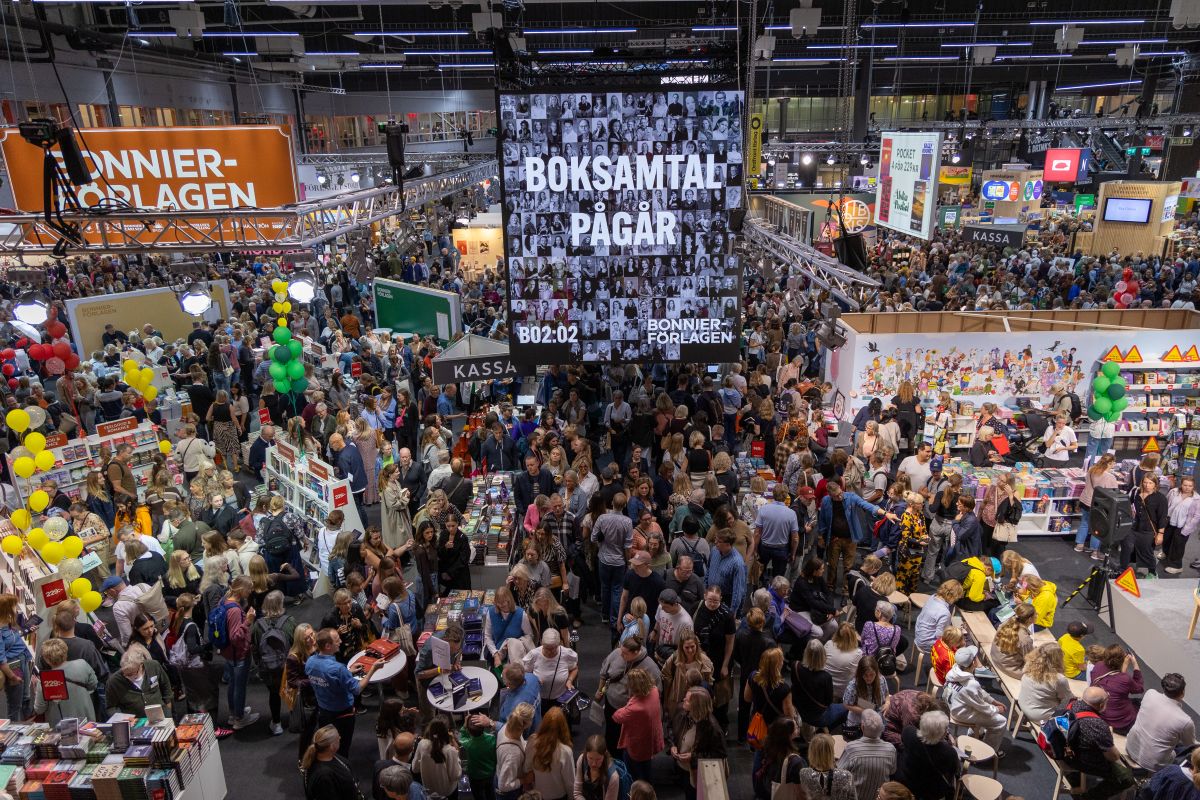
In 2025, drama reclaimed its rightful position at the heart of Sweden’s literary scene when it was highlighted as one of the themes at Gothenburg Book Fair, Sweden’s primary publishing event. For four days thousands of visitors were treated to a wide variety of readings, panels and ‘drama slams’, as participants explored the possibilities of contemporary drama and its role in grappling with the most fundamental of human questions.
One of the driving forces behind this project was Hedda Krausz Sjögren, CEO of Sweden’s Colombine Teaterförlag. Alongside a group of Nordic and Baltic partners, she developed a fair programme that brought drama – and those that produce it – back into the spotlight.
Some months after the conclusion of the fair, Swedish Book Review spoke to Hedda Krausz Sjögren and two programme participants, playwright Isabel Cruz Liljegren and dramaturg Marc Mathiessen, to take stock of the project and its impact. In this series of interviews, the interviewees discuss their work, burgeoning public interest in the dramatic arts, and the future of theatre in Sweden.
SBR: How did you become involved in the Drama focus at Bokmässan? How natural did it feel to bring drama into the bookfair space, and what did you draw from it as a participant?
Marc Matthiesen: Colombine Teaterförlag invited Kulturhuset Stadsteatern, where I work as dramaturg, to make suggestions for possible programme items for the fair, of which we provided two. It felt quite natural to be part of the book fair, and our area of literature should have an obvious place there. Drama is literature, and literature is drama. I felt that the public appreciated these panels and seminars.
It is more important than ever that we demonstrate that theatre is a fundamental part of society, not just as entertainment, but as a way of promoting democracy and open discourse.
Can you tell us a bit about your approach to the dramaturgical process? How would you describe your work?
As a dramaturg you have different processes. On the one hand you might be an institutional dramaturg, who serves as an advisor to the theatre’s artistic director, helping to develop a varied and creatively interesting programme. This is all about reading drama, maintaining contact with authors, directors and translators, and seeing works domestically and abroad. Alternatively you might be a production dramaturg, who sits in on rehearsals and maintains an artistic dialogue with directors and actors in their day-to-day work.
You have worked on a range of productions in some of Sweden’s most important theatres. From your experience, what do you feel are the greatest challenges now facing drama, and what areas are thriving?
When the economic reality is what it is – when culture is no longer prioritised and receives less and less funding – it is more important than ever that we demonstrate that theatre is a fundamental part of society, not just as entertainment, but as a way of promoting democracy and open discourse. We need to make storytelling feel urgent not just to committed theatregoers but also to future generations, by portraying and reflecting society through different voices and experiences. This is of course done by bringing in young people and caring about their stories, but also by working towards making the theatre experience challenging as well as entertaining. The unique thing about theatre is that it is the ‘here and now’; we are in the same space, experiencing a shared story. You don’t consume; you experience and react.
The unique thing about theatre is that it is the ‘here and now’; we are in the same space, experiencing a shared story. You don’t consume; you experience and react.
In addition to your dramaturgical work, you are also a translator. Do you feel that your experience of dramaturgy has informed your translation practice (or vice-versa)?
To translate is to scrutinise the text and its language, in a way that only actors or directors otherwise do. As a dramaturg, having this proximity to the innermost core of drama is of course a big advantage.

Marc Matthiesen
Marc Matthiesen is a dramaturg at Kulturhuset Stadsteatern and has also worked as a translator, primarily of German drama and prose. He has translated a dozen or so plays for Göteborgs Stadsteater, Dramaten, Helsingborgs Stadsteater, Uppsala Stadsteater and Radioteatern.