
‘The Point of Anthologies Is that They Should Surprise You. You Should Find Something There That You Haven’t Seen Before’
Editors Vendela Vida, David Katznelson and Ulf Olsson on a new anthology of classic Swedish short fiction
interviewed by Alex Fleming
Out of the Darkness is a new collection of Swedish short fiction from the 1880s to the 1950s. Spanning realism to symbolism to more experimental works, the stories in this volume – many of which never before published in English – offer readers a glimpse into the oeuvres of some of Sweden’s most groundbreaking and beloved writers.
Ahead of its publication, the editors of the anthology – Vendela Vida, David Katznelson and Ulf Olsson – sat down with SBR to discuss this fifteen-year project, the magic of the short story, and why this ‘treasure chest’ of Swedish writing may surprise contemporary readers.
SBR: Could you tell us a bit about how this project came about? As editors you bring quite diverse experience and backgrounds to the project – how do you feel these affected the curation of this anthology?
David Katznelson: I’ll start out, being the person who’s farthest away from having a literary profession. I’m a failed PhD dreamer who jumped into the music industry. One day I picked up Pär Lagerkvist’s The Dwarf at a used bookstore in Arcata, California, and it was spewing such venom that it really intrigued me. I read it, and I loved it, and I read everything else I could find by him in translation, which also led me to other authors whose books were harder to find in English translation – Hjalmar Bergman being I think the first. Over time I amassed a pretty incredible collection of translations from Swedish, many of which from the 1910s, ’20s and ’30s that had not been translated again.
Vendela’s family is from Sweden, and she and I started talking about these amazing authors that just aren’t really known in America, despite there being many different literary canons that Americans have explored from around the world. Even when people study ‘Scandinavian’ literature here it’s often very frontloaded with Norwegian authors. That’s when that epiphany happened that we should think about making an anthology.
Of course, Vendela comes from the publishing world, as well as being an author herself, so this is something that she is passionate about. She connected us to Barbro Osher, who is a pretty major funder for Swedish goodness, and Barbro gave us the finances to start the project. She also introduced us to Linda Rugg, who was Dean of Scandinavian Studies at UC Berkeley at the time. Linda in turn introduced us to Ulf, and Ulf decided that he liked the idea of the project and jumped aboard. This was all around fifteen years ago.
Vendela Vida: We needed funding from the beginning because we realised that, for this anthology to be as powerful and as attractive as possible to new readers, the translations had to be good. A lot of the translations we came across were a little stiff or archaic, and we thought that right away that might make the reader less receptive to them. And some of the stories had not been translated at all. Translators are often underpaid and underrecognised, so we wanted to make sure that they were respected in the process as well, which included being paid.
As for our backgrounds, in addition to David’s enthusiasm, he has put together lots of projects before – usually beautiful music box sets – so he knew how to curate a project and bring it out into the world in a really attractive way that would appeal to new readers. Ulf brought his expertise on Swedish language and literature, studying the translations thoroughly to make sure they were the best they could be. And I brought my editing background to the project. I’ve edited The Believer magazine and a number of anthologies, so I’ve had experience of bringing in disparate elements and putting them together in a book. We all brought our different talents, but I would also say we all brought our different interests in the stories.
Ulf Olsson: Yes, I agree. I must say that being part of this editing process you learn something about the other editors. David is the kind of person for whom nothing is impossible, and Vendela showed herself to be such a fantastic reader, an incredibly close, careful reader. So we had complimentary qualities. We formed a pretty good group, I think.
DK: And I just want to say that Ulf brought such a wealth of knowledge on the whole canon, introducing us to authors we didn’t know about, short stories that were deep in his DNA.
The whole journey began with Pär Lagerkvist, but unfortunately we couldn’t get the estate to approve the use of the story we wanted to use, so that’s why he’s not in the anthology.
Stories are not bound by any sort of aestheticism that they appear to represent; they can speak through realism or symbolism or even modernism.
The anthology covers several literary movements, from realism to modernism to symbolism and more. Why did you feel it was important to include this breadth of styles and time periods?
UO: I don’t think we really thought it important; it just happened. Of course we wanted to be representative to some degree – so that the book could be useful for teachers in different settings, for example – but we felt it was more important to include stories that would speak to readers today. I think it shows that stories are not bound by any sort of aestheticism that they appear to represent; they can speak through realism or symbolism or even modernism. We wanted to find stories that have some kind of relevance today for new readers. And hopefully we’ve succeeded.
It also showcases a mix of new and existing translations. How did you go about deciding which translations to use, or when to commission new translations?
VV: We knew we needed a new translation if existing translations felt that they weren’t translated smoothly, or maybe needed a fresh set of eyes. I think especially with stories written a hundred years ago, sometimes translators feel they have to make the story feel old and stiff or sometimes even a little anglicised, and that was not what we were going for with this anthology; we wanted to make sure the translations were accessible and also reflective of the beauty of the prose.
And again, some of the stories had never been published in translation before. Those were really exciting to me, especially since I was very passionate about the female authors who were given voice in English, many of whom for the first time. I’m a huge fan of ‘The Gates’ by Agnes von Krusenstjerna (translated by Victoria Häggblom), who was a very important figure in Swedish literature – Mai Zetterling’s 1986 film Amorosa was made about her life. So that was my personal passion. I just love the idea that these Swedish female writers are being brought to new English-speaking readers.
UO: A translation can be ‘correct’, of course, but at the same time it can be dead. So you want a translation that transfers the atmosphere or ambiance from the original over to the new language. For instance, we use an old translation of one of the Selma Lagerlöf stories, because it had such a beautiful melody to it. It’s not perfect, but it has this beauty. We tried, of course, to make sure each translation was ‘correct’, but the song of it, the melody, the rhythm of the language, was more important.
DK: One guiding light for us when looking at each translation was whether the story holds up to all the other stories that were there. Our desire was to excite new generations with this literature, so we needed to make sure every story was fantastic.
VV: Our goal too was that everyone would have a different favourite, reflected by our own tastes. And the fact is, we each have a different favourite story in the collection.
Whenever you find censorship in literature obviously you find struggles, darkness expressed both on and off the page.
What came as the biggest discovery for you when curating and editing this book?
UO: For me it was that it would be possible to do an anthology that was twice or ten times as long as this one. The richness of literature is enormous – there are so many good stories out there. We could do a Strindberg volume of 500 pages. But you want a book that’s possible to carry around, something that’s practical, and I think this one is.
VV: I would say the surprise for me was seeing how modern some of the stories felt, especially the stories by Hjalmar Söderberg. Even ‘Half a Sheet of Paper’ by Strindberg (tr. Victoria Häggblom) felt very avant-garde: you see a lot of people writing similarly sparse prose stories today, very short-form fiction or ‘sudden fiction’, as it is called. It was very interesting for me to see that this was something Swedish writers had been doing a century ago. I’m a huge fan of the Söderberg stories and just think they’re incredibly well done.
DK: To be honest, every story that we translated was a surprise to me, because I come to this world as an enthusiast. This journey allowed me to discover authors through stories that were essentially coming to English for the first time. It kind of blew my mind. For example, I’d never heard of Thorsten Jonsson, and so when I read ‘Fleeing to Water and Morning’ (tr. Victoria Häggblom) it was really exciting to be able to call Ulf and have a deep conversation about the themes and metaphors offhand.
In your editors’ introduction you describe these stories as ‘Fueled by shadows – of insanity, or the dark hand of fate, or the pervasiveness of evil, or just the eerie feeling that triggers the multifidus muscles gripping the spine.’ Were these parallel threads intentional, or is it part of the nature of anthologies that unexpected resonances between stories will come to light?
DK: I’m a very light person, but I’m attracted to dark art. There is a thread running through these stories that you discover more and more as you get into them. They’re like dark fairytales – from the realist period, the romantic period – but there’s a pervasive sense of darkness that links it all together, which by the way I find to be wonderful, warm and lovely.
UO: I think the point of anthologies is that they should surprise you. You should find something there that you haven’t seen before. Anthologies make that possible, these ‘invisible links’, to quote Selma Lagerlöf, that are suddenly open to your gaze. That happens only if you have an anthology that has a personal touch to it, some subjectivity in the selection, one that isn’t only ‘representative’ but adds something else. I think that’s a pretty amazing thing about anthologies in general.
VV: I think there’s also a sense that many of the authors felt they couldn’t truly be themselves, couldn’t express their homosexuality or sexual nature. A lot of the women especially had to write under pseudonyms. And whenever you find censorship in literature obviously you find struggles, darkness expressed both on and off the page.
UO: It also makes you wonder: What are the connections? A story like ‘The Gates’ is a story about exploring the city, while Strindberg’s ‘The Silver Lake’ (tr. David Mel Paul and Margareta Paul) is exploring the forest instead. Still, something about the journey that these protagonists make gives them some kind of connection. I think one obvious theme here that I love reading is that of the fugitive: in Lagerlöf’s ‘The Outlaws’ (tr. Pauline Bancroft Flach), Jonsson’s ‘Fleeing to Water and Morning’ and Strindberg’s ‘What the Tree-Swallow Sang in the Buckthorn Tree’ (tr. Ellie Schleussner). And, as Vendela said, there is the darkness of repressed forms of humanity that show up in the stories by Victoria Benedictsson and von Krustenstjerna especially. I love these connections, these patterns that become visible here.
I think it’s safe to say that most of the names on this anthology are names that Americans have never even heard of. It would be excellent if they could find their way more deeply into the American literary reality.
Have your own relationships with these writers – or the short story format itself – changed at all over the course of the project? What do you hope readers will take from this collection?
VV: Some people will come in with certain preconceptions, especially about names that are known to them, like Strindberg and Lagerlöf, but I hope that readers are surprised by reading this wider swath of stories. We want people to be surprised, both by the subject matter and by the techniques that these writers employ.
DK: I have a grand hope that some of these stories find their way into a bigger canon of stories that are studied and loved in America. For me Stig Dagerman’s ‘To Kill a Child’ (tr. Victoria Häggblom) was just as damaging and incredible as ‘The Lottery’ by Shirley Jackson and ‘A Good Man is Hard to Find’ by Flannery O’Connor. I think it’s safe to say that most of the names on this anthology are names that Americans have never even heard of. It would be excellent if they could find their way more deeply into the American literary reality.
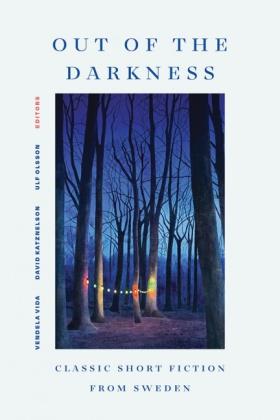
Out of the Darkness: Classic Short Fiction from Sweden (available May 2026) is published by University of Minnesota Press.
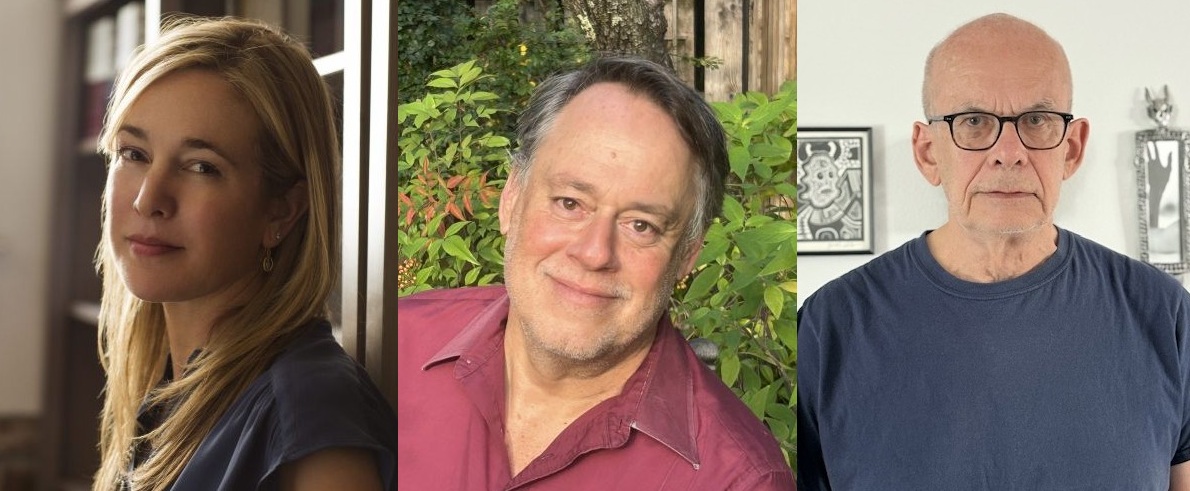
Vendela Vida, David Katznelson and Ulf Olsson
Vendela Vida is a founding editor of The Believer magazine and the award-winning author of six books, including Let the Northern Lights Erase Your Name, The Diver’s Clothes Lie Empty, and We Run the Tides. Two of her novels have been New York Times notable books of the year, and she received the Kate Chopin Award, given to writers whose female protagonists choose an unconventional path.
David Katznelson is a Grammy-nominated musicologist and record producer, CEO of Reboot and publisher of the newsletter The Signal From David Katznelson.
Ulf Olsson is professor emeritus of literary studies at Stockholm University and literary critic for the daily newspaper Expressen.