
from No Need to Fear
(Vi behöver inte vara rädda)
by Elin Grelsson
translated by Elinor Fahrman
Vi behöver inte vara rädda is a gripping documentary novel about Lotte and Stefan Zweig, following the course of their lives through the early years of the war from Britain to the USA and on to Brazil, where the shared journey of the couple comes to a tragic end. This is a novel of exile and of living through a time of chaos, but it is also an examination of co-dependence and love - even of the morality of love itself - exploring who we become for each other when everything is about to be lost.
In the mornings she walks behind the girls across the fields. They insist on taking this route to school, even though it’s a detour and she has to remind them not to be late. But she can relate to them. It’s a detour worth taking, the winding paths, the valleys, and the view of the town. She accompanies them on the days when he needs to be on his own before their working day begins. As she makes herself comfortable in front of the typewriter and inserts a new sheet, he raises his hand to stop her.
“Wait a moment,” he says. “Let me be alone with my head first.”
She gets up again, pauses next to him on the way out. His thoughts are already elsewhere when he kisses her and she strokes his cheek, already facing the office. The heavy curtains are still drawn, he likes it that way. As if shutting out the light helps him validate his loneliness.
The days are beautiful here. Even when it’s grey and heavy with rain like today, she’s struck by the intensity of the green foliage. And the stillness. She hasn’t experienced this kind of tranquility since the sanatorium.
The girls have run ahead. If they stop to examine something; a dropped scarf, a hollow tree trunk or a frog, she nudges them along. Lotte likes following them at a distance, watching their red coats swing from side to side, hearing their laughter and catching snippets of their conversation. Sometimes she loses sight of them when the path bends or they’re up a hill, but then they reappear. Eva and Ursula have just stopped at the lake, they’re on the bridge, looking down on the murky water below. Lotte catches up with them.
“Hurry up! School starts in fifteen minutes!”
“Look Auntie Lotte, the water lilies are on their way out!”
Ursula points her finger at some shriveled flowers turning inward. The dying leaves are still floating on the surface, but soon they will sink.
“Yes, Ursula, it’s autumn.”
She briefly strokes Ursula’s hair but immediately regrets it. Eva observes her, recognizes her confusion. Lotte finds her voice again.
“Now, be on your way!”
They nod and start running. She remains, watching as they fade into the distance until they’re two small red dots and eventually no longer visible. She returns the way they came, breathing in dampness and dew.
Breathing is easy here. Her episodes occur more seldom. Stefan was right when he said she needed to leave London; the dirt and fumes she breathed in and the house with black mold and draughty windows. The medicine Manfred prescribed helped temporarily as did the ventilator, the big machine through which she could breathe during the heaviest attacks, but there was also the worry. The body constantly on alert, as if each breath took her by surprise. This period had been worse than the previous ones, more persistent. It was hard to think, all her strength was used to tense up in fear that her lungs would cramp up with her next breath.
“The worry makes it worse,” Manfred said, “anxiety creates the attacks. It becomes a vicious circle, you do understand, don’t you?”
Yes, she understood. But she didn’t know how she would find a solution, how to navigate away from the vicious circle and neither did Manfred. Since moving here she had slowly become used to not having to be afraid of breathing.
Rosemount is slowly appearing. At the top of the street, slightly set back from the other buildings. The first time she saw it she immediately understood why Stefan had been so drawn to it. She had heard him talking about the house in Salzburg, about its view of the town, part of the community but at a safe distance.
“Did you know you could see the Eagle’s Nest from there?” he always said when he talked about the house. “If only I’d known.”
She never asked why, surely there was no answer to what difference it would have made, had he known.
Rosemount has the same reserved attitude to its surroundings as the house in Salzburg seems to have had. There’s an office, a library and a bedroom with large windows facing onto the trees. When he first brought her here she saw in him what she felt herself: homesickness. It was the best house they could get for the time they needed to stay.
Lotte opens the gate. Mr Miller hasn’t arrived yet. The house in Salzburg had a garden too, for which Friderike had been responsible. The idea had been that her daughters would look after it, but according to Stefan, it had been neglected. Weeds took over and saplings and hedges weren’t cut back ahead of winter. The leaves still lay on the ground far into the summer. Friderike had to do everything herself in order not to feel embarrassed in front of the neighbors.
“The house comes with a gardener,” said Stefan delightedly when they looked around. “He’ll take care of it and make sure everything is well maintained.”
They still hadn’t hired a cook, but maybe that was for the best. Lotte walks around the house and into the kitchen. She likes having free movement in here without bumping into another human being. She puts the kettle on and makes herself a sandwich while waiting.
“Lotte, are you back?”
She carries her cup down the corridor, to the office to which he has opened the door and is waiting for her. His warm eyes meet hers. A light kiss with dry lips against her cheek.
“Is it a beautiful morning?”
“It is.”
“Then I will let the light in now.”
[...]
BATH, ENGLAND
1 September 1939
Dust hangs in the air. The tobacco smoke is acrid, somebody must have just smoked in here and her lungs start hurting.
“It’s nearly our turn.”
He puts his hand on her shoulder, she looks around for an open window. If there’s one open only slightly where she can breathe in a few times it will be enough. But they’re all closed. Stefan notices the growing worry in her eyes, tells her she can give him the documents and wait outside.
“We’ll book the sixth of September, right?”
She nods, hurries out, crosses the street and rests in the shade of a chestnut tree next to the town hall. A warm breeze makes the leaves rustle. Lotte looks up at the bough of the tree and takes deep breaths through her nose. All the documents are in order. She has bought herself a simple cornflower blue dress in Oxford Street. Stefan wanted to pay for it but she insisted. She would buy the wedding bouquet in the market just before the ceremony. They just need to get everything ready for when Manfred, Hanna, Eva and mother arrive.
Here she is. After all those years of insecurity and longing. Her stomach tingles. Mrs Zweig of Rosemount. Just as she’d written in the letter to Anna the other day. It feels surreal that it’s actually happening.
He comes out. She watches him standing by the entrance in the shade, fiddling with something. She calls for him, so that she won’t have to cross the road. He’s lit a cigar, perhaps to celebrate. But when he gets closer, moves towards her without looking out for traffic, she notices the darkness that has fallen over his eyes. Her stomach clenches.
“What’s wrong? Something about the documents?”
He shakes his head. She touches his arm awkwardly as he takes a drag on the cigar. “There was a clerk in there. He arrived just as I was finishing and told everyone.”
The wind in the trees and somewhere a child is laughing. She tries to decipher his incoherent speech between drags.
“What are you talking about?”
Stefan shakes his head, the wind carries his words away but she manages to understand anyway.
“We’re at war again.”
[...]
BATH, ENGLAND
6 September 1939
Her voice trembles slightly when she says yes. The bright sun shines through the window and she has to squint, but she can see his eyes smile at her when he adds his yes. A kiss, their signatures on a piece of paper and thanks to the registrar and the clerk who has acted as witnesses. They congratulate them and rush off to the next wedding. Stefan squeezes her hand, she’s holding onto the bouquet firmly with the other.
“And so it’s done. A new step forward in the name of order in a world eternally disordered. Come, my wife.”
They should have emerged to embraces of congratulations and jubilant cheers. They were all supposed to be there: Manfred, Hanna, Mother and Eva, dressed in the outfit they had chosen for her, specifically for the occasion. But no one awaits them. It was inevitable, she’d understood as much when news of the war broke. There were blackouts in London, Bath too. The rail service is chaotic and four thousand refugees have reputedly already reached Bath.
Lotte had never dreamt of a big wedding and this ceremony, well, this marriage, is merely a formality. She tries to remind herself of this as they walk hand in hand from the town hall to the restaurant at Pulteney Bridge where they have reserved a table. It’s a perfectly sized wedding for them.
It all started with the house and the move here. One afternoon, in the middle of their working day, he told her about the house he’d found in Bath.
“We are overcrowded in this flat,” he said and spread his arms open wide towards the little room and the kitchen, both filled with books, “and you can’t stay with Manfred and Hanna any longer, you’re nearly thirty and you share a room with your mother.”
His hands were always dry and when he took hold of hers there was a slight scratching against her skin.
“I’ve found a house. You’re going to feel better there.”
It was weeks before she told Mother, Manfred and Hanna. It was during one of those rare moments when they were all at home at the same time and they could speak undisturbed in the kitchen. Lotte breathed in and swallowed, waited until there was a gap in the conversation and blurted it out.
“He wants to move and he wants me to move in with him.”
She reminded them that Bath was near, only a couple of hours away by train. They would still see each other often and they were always welcome to visit in Bath whenever they needed a break from the big city. The silence in the kitchen. Manfred cleared his throat and stirred the tea he’d just made. In only a few years he’d become a tea drinker, explaining that it was an important part of making the local patients feel comfortable. Saying no to tea during a home visit wasn’t an option and he’d become so used to it now that he preferred it to coffee. Mother leaned back and took a deep breath. Only Hanna had something to say.
“He’ll have to marry you, then.”
Always that sharp tone of voice, even though she meant well she sounded harsh. Lotte let out a laugh, she could hear how nervous it sounded.
“He just got divorced.”
“Exactly, he’s divorced. He can’t take you with him and move in together without marrying you.”
Manfred still wasn’t saying anything, he just stirred and stirred his tea. “Marriage would be sensible,” Mother agreed.
“That’s not up to me to decide,” Lotte said in an unwarrantedly shrill voice. Why had she even told them? She should have waited longer. She could have waited until the move was beyond all doubt, the sale had yet to go through and now she had to defend a vague plan that had intensified because of the talk of marriage.
“He needs to decide with you. You have to demand it.”
Hanna stood up and leant on the sink, her back towards Lotte, who wished she were also on her feet. . To be able to meet Hanna like an equal. She felt it in her lungs, an imminent fit. Something was coming. Hanna turned to face her.
“You can’t move into a house in the middle of nowhere with your employer and lover just like that. Especially not in times like these. You know that full well.”
Her cheeks were throbbing. She looked down on the table. Her lungs felt squeezed. It was the first time they’d called him her lover. Of course they knew, everybody knew. But the unspoken had now been said aloud.
Lotte never had to consider how she would broach the subject. They shared a bottle of wine with their evening soup and he told her about the house. It was his if he wanted it, he only had to sign the documents and pay. There’d be ample space for them both.
“And we’ll get married of course,” he added quickly before he slurped down his tomato soup.
“Really?”
She put her spoon down.
He looked at her, nodded as if he’d said something undeniable that she now questioned.
There were red stains from the soup in his moustache.
“If not for any other reason than our own safety. We don’t know what’s coming our way, Lotte. We don’t know what’s coming anyone’s way. I’ll have my citizenship soon.”
As he looked down at his soup bowl, a darkness swept over him. His face shut down and his gaze grew lifeless.
“They can’t split us up if we’re married.”
She wanted to know who he was talking about. The Nazis? Or was it the English that wanted to get rid of them, or perhaps just her? She who wasn’t anybody, just another Jewish refugees that had escaped here. But this part of him was closed off, there was no spark of light in the darkness that came over him when he started talking about Hitler, the general mood around them, or everything that he should have seen much earlier and now the world was about to burn. This side of him frightened her almost as much as his deeply buried sadness.
When he finally looked up, the joy in his eyes had returned. “And of course, I also love you.”
He let out a laugh. She felt a warmth building from within and she laughed with him. “Am I supposed to answer your proposal, or what do you expect me to do?”
He cocked his head, the crows’ feet that appeared when he smiled. How she loved those eyes.
“Well, it wasn’t much of a proposal but it was timely.”
“In that case I suppose I’ll say yes.”
The restaurant is nearly full even though it’s only early in the afternoon. Conversations are hushed, occasionally someone lets out a laugh. It’s peculiar how existence has carried on the last few days. The town has become livelier from all the evacuees arriving. A density resembling London but with a slower speed and more kindness. As if the tourist season had already started. Stefan cuts his steak attentively, without bringing a piece to his mouth. Lotte has laid down the bouquet on the table, the yellow dahlias have already started to wilt. The assistant in the flower shop said they matched her dress so nicely. She could ask for a vase? Stefan looks at her. He breathes in and scans the room.
“It’s strange. Sitting here with you, being happy, as the world crumbles around us.” She doesn’t reply, takes a sip of wine.
“Maybe we could build an ivory tower together,” he continues, “we can build a home in our new house, it might just be possible to keep the war at bay from there.”
“But you’re hesitating?”
A waiter walks past. Next time she’ll ask him to put the flowers in some water. “Yes, I think the future for such a tower is very uncertain.”

Vi behöver inte vara rädda
Natur och kultur förlag 2026. 254 pp. ISBN: 9789127191525.
Foreign Rights: Nordin Agency.
We are grateful to Natur och kultur förlag for their permission to publish this extract.
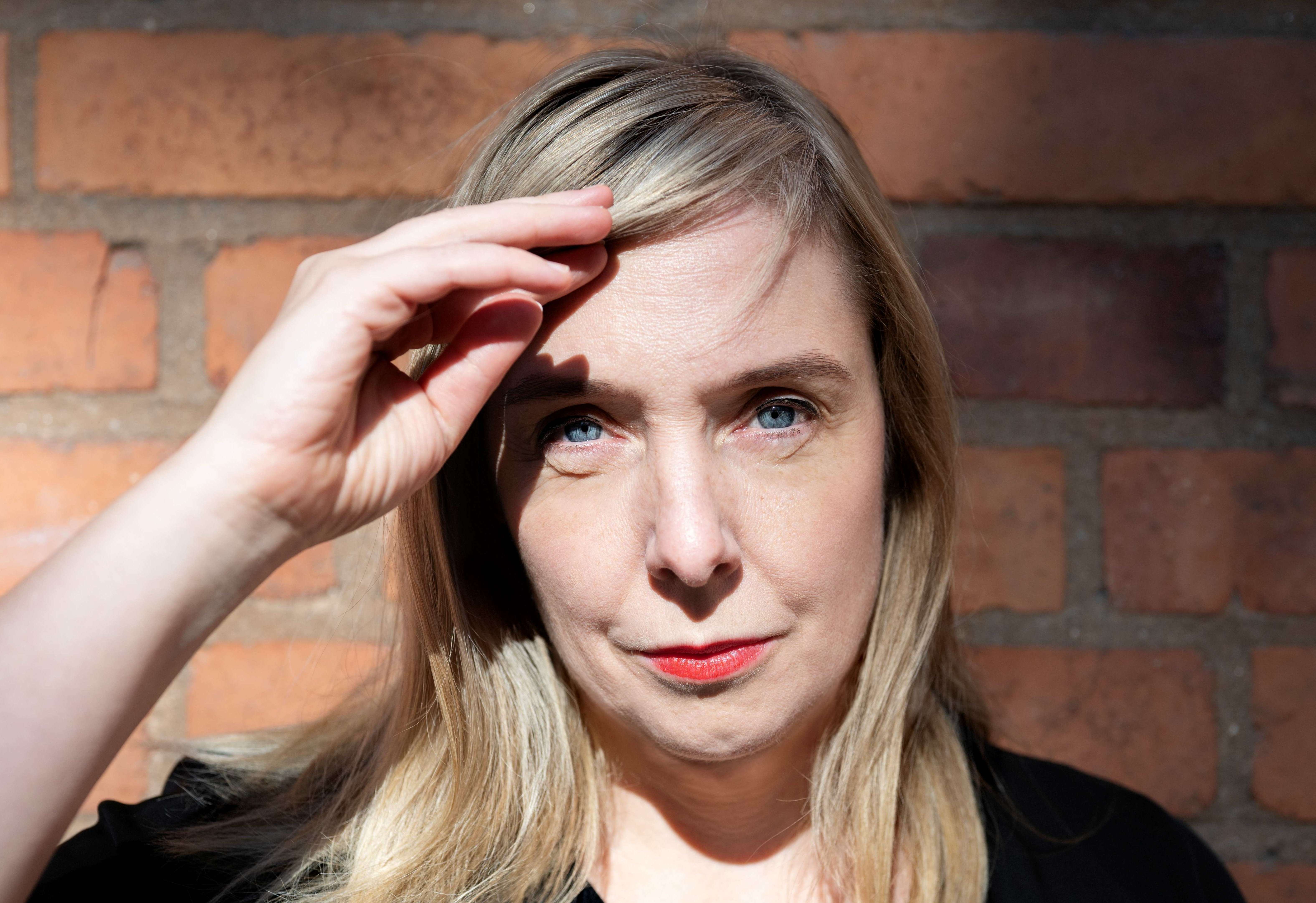
Elin Grelsson is the author of critically acclaimed novels The Sound of Comfort in 2011 and The Dogs on the Main Street in 2016. She is also a cultural writer and critic for Expressen and Swedish Radio, and educational leader at The Swedish Writing Academy (Skrivarakademin).
Elinor Fahrman is a London-based vinyl DJ, illustrator and translator. In 2021 she translated Per Hagman’s cult debut novel Cigarette (1991) for its thirtieth anniversary.