
Latest issue
2026:2
Featuring works by Ingrid Carlberg, Elin Grelsson, Zara Uzun Kjellner, Sanna Kullin, Hanna Sahlberg, Linda Spåman, Lida Starodubtseva, and more.
Editor: Henning Koch
Reviews Editor and New Books: Darcy Hurford
Advisory Editors: Deborah Bragan-Turner, Fiona Graham, Paul Norlen and Kathy Saranpa
Social Media: Sophie Ruthven
Image credit: Matheo JBT on Unsplash.
The main focus of SBR 2026:2, my first issue as editor, has been to present individualistic books that cross the boundaries of both genre and geography - books that may even be, in a sense, transnational. There is still breadth and scope in contemporary Swedish publishing. Even in an era of tight financial strategizing and conservatism, startling and unique books are being published and they must obviously be given as much attention as possible.
The Swedish Book Review first appeared in 1983, a longevity that must surely be considered a remarkable achievement. One of its early pioneers, Tom Geddes, said in an earlier interview with us, that the journal “would not have been possible without the contributions steadily forthcoming from a burgeoning community of translators of Swedish.”
Of course, there have been a good many changes along the way, the most significant of these probably the digitization of the journal in 2020 under the assured editorship of Alex Fleming.
In essence, however, the Swedish Book Review is still doing today what it was doing at the outset, 43 years ago. The concept seemed precarious at the time, but has since become a commonly accepted idea: namely, that even the literary output of a “small language,” a Nordic country on the periphery of Europe, can punch above its weight and achieve relevance across the linguistic divide.
As ever, SBR features an insightful selection of Reviews edited by Darcy Hurford, focusing on new Swedish books. And, of course, now that SBR is being indexed, almost all reviews and translated excerpts are searchable and thus intrinsically more applicable than when they were first printed on paper.
In Translations, we present an excerpt from the latest novel by emigré Swedish author Lida Starodubtseva, set in Karelia, a little-known border region between Finland and Russia. Also, an excerpt from Elin Grelsson’s novel No Need to Fear, an exploration of the lives of Lotte Zweig and the Austrian author, Stefan Zweig. Further, we have an excerpt by Swedish-Kurdish literary star, Zara Uzun Kjellner, whose haunting Radio Yerevan cuts across cultural lines and investigates belonging and separation.
In non-fiction we include a stunning reportage from China, The Invisible Wall, documenting the efforts of foreign correspondent Hanna Sahlberg to become a national of that country – published here with an anonymous introduction by a Chinese colleague. Still in the political sphere, an excerpt from The Marionettes by the eminent journalist and non-fiction writer, Ingrid Carlberg, provides an in-depth historical analysis of the concept of “fake news.”
Finally, we showcase excerpts from two outstanding comic book artists – Linda Spåman and Sanna Kullin – who have re-lettered their cartoons in English for SBR. Both are published in Sweden by Galago, a specialist in the field of comic books and graphic novels, whose publisher, Sofia Olsson, interviewed here, provides fascinating insights into the world of Art Spiegelman, Raw, and the early days of Swedish counter-culture.
We are so grateful to the Swedish Arts Council for all their generous support over the years! Without it, none of this would have been possible.

Translations
Latest Translation
from A Year of Apocalyptic Thinking by Linda Spåman
Linda Spåman's remarkable, tragi-comic descent into the inner workings of how we cope with the death of someone very close to us.
Translated by Henning Koch
Latest Translation
from Hilja Walks by Lida Starodubtseva
A novel about seeking or getting away from one's origins. Also, how to define a place and be defined by it. And whether it is wrong or even necessary to write down the tales of our dead ancestors.
Translated by Kathy Saranpa
Latest Translation
from The Marionettes by Ingrid Carlberg
Ingrid Carlberg delves into the history of political propaganda as an instrument of power from Lenin to Steve Bannon.
Translated by Ian Giles
Latest Translation
from Radio Yerevan by Zara Uzun Kjellner
Kjellner's critically acclaimed, transnational novel that electrically wires the fractured lives of the Kurdish diaspora across haunted landscapes of flashing monitors, where traditional borders have dissolved into thin air and become meaningless…
Translated by Nichola Smalley.
Latest Translation
from The Gothenburg Syndrome by Sanna Kullin
Göteborgssyndromet is a witty graphic novel about the willingness yet also inner conflict of a young woman letting go of everything for the sake of a fantasy of love.
Translated by Henning Koch

Latest Translation
from No Need to Fear by Elin Grelsson
England, 1939. Jewish refugee, Lotte Altmann, has just married Stefan Zweig, the famous Austrian author, after years of being his secretary and lover. At the same time, a darkness draws in over Europe…
Translated by Elinor Fahrman.
Latest Translation
from The Invisible Wall by Hanna Sahlberg
Hanna Sahlberg's account of her doomed attempt to settle in China and become a Chinese national.
Translated by Dr. Karin Filipsson
Features
LATEST INTERVIEW
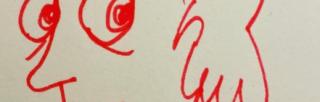
Sofia Olsson of Galago förlag
A conversation with Sofia Olsson, publisher of Galago förlag, about the trials and tribulations of comic book publishing in Sweden, Europe, and the world.
Reviews
curated and edited by Darcy Hurford
Fiction
LATEST REVIEW
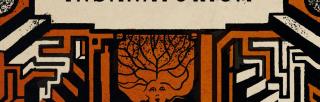
InSanatorium
Hannele Mikaela Taivassalo explores the power and importance of human connection in the world of damaged characters in her latest novel, InSanatorium.
LATEST REVIEW
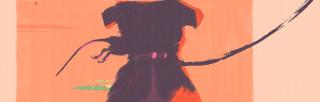
Karlaplanspraktikan
Get under the skin of one of Stockholm’s most exclusive postcodes in Måns Wadensjö’s polyphonic novel, The Karlaplan Internship.
LATEST REVIEW
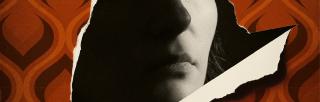
Innan natten tar oss
Winner of the 2017 Best Swedish Crime Novel Award and the Glass Key Award, Camilla Grebe will not disappoint with her latest offering, Before the Night Takes Us.
LATEST REVIEW
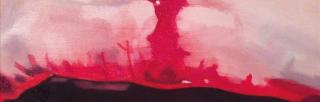
Ultravåld
Part daytime TV soap opera, part Dostoevskian epic, Tone Schunnesson takes it up a notch with her third novel, Ultraviolence. The story of the doomed Griepenbrand family is a literary joyride fraught with trauma, absurdity and its fair share of blood and guts. Reader discretion is advised.
LATEST REVIEW
Det är om dig jag skriver
You’re the One I Write About by Moa Backe Åstot is a young adult novel in poems about first love, in all its pain, excitement and challenges.
LATEST REVIEW
Sot
Strange deaths in Åre turn out to be interlinked Sara Strömberg’s latest skilfully woven crime novel, Soot.
Graphic memoirs
LATEST REVIEW
Årets by
A graphic novel set against the backdrop of Kiruna, the northern Swedish city gradually being relocated, Village of the Year is Hilda Westerberg’s unsettling debut.
LATEST REVIEW
Everest
A mother finds life with her partner and young children to be an uphill struggle, and instead sets her sights on Mount Everest in Alma Thörn’s graphic novel Everest.
Fiction for children and teenagers
LATEST REVIEW
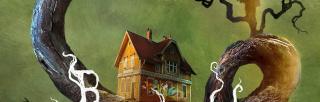
Bortbytt
In Linda Johansson’s Changeling, the forest surrounding a small Swedish town becomes a place of unease and terror.
LATEST REVIEW
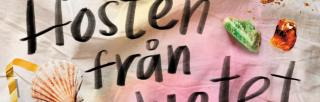
Hösten från helvetet: Ebba Blaus dagbok
In Autumn from Hell, Ellen Strömberg gives authentic voice to the trials and tribulations of twenty-first-century pre-teen girls on the cusp of adolescence.
LATEST REVIEW
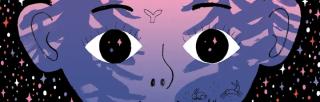
Osynligt
A child ponders the existence of the invisible in The Invisible, this August-nominated picture book by Annica Hedin and Karin Cyrén.
LATEST REVIEW
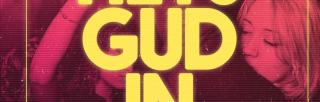
Frihetsgudinnan
What does it really mean to be free? When do we need boundaries? And how do we learn that independence in relationships is supported from a certain amount of give and take? Sophia Westin’s young adult novel Lady Liberty touches on these questions.
LATEST REVIEW
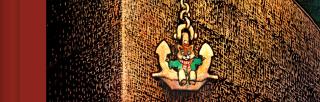
Lysinea - den vidunderliga historien om ett fartyg
The adventure of a fox on an ocean liner stranded at sea, Lena Frölander-Ulf’s Lysinea – the Marvellous Story of a Vessel is a distinctively illustrated book for young readers with an understated moral lesson.
Non-fiction
LATEST REVIEW
Lögnare
Can you always believe what you read and see online? In Daniel Andersson’s book Liars, we read of a journalist striving to uncover a web of lies created by Sweden’s most controversial political party – the Sweden Democrats.
LATEST REVIEW
Gråt
Why do we cry? In Crying – The Philosophy of Tears Eric Cullhed tracks down the answers drawing on science, philosophy, history, anthropology and literature across the centuries.
