
from Hilja Walks
(Hilja går)
By Lida Starodubtseva
translation by Kathy Saranpa
Two women arrange to meet in an unkempt churchyard in Saint Petersburg. They do not know one another, but they both write “blogs” on the net. The only other thing they have in common is that they have Finnish maternal grandmothers. Anna is obsessed with the fate of her grandmother, Hilja: one of thousands of Finns from Ingria deported to Siberia and Central Asia during the Second World War. After Stalin’s death she made her way back to her old home, which could no longer be known by its name, Ingria. By herself. Walking.
Anna writes and the narrator reads compulsively, yet for every page her scepticism grows stronger. Is it really possible to know anything about Hilja?
from Hilja Walks
Pages 50-61
anna_of_omsk 25 April 2005
Yesterday I finally found the right suitcase – big enough but pretty light. In St P-burg there are a lot of multiple-storey buildings with no elevator. I suspect there won’t be one in the building I’m going to be renting in. It’s an old building in an old neighbourhood. On Vasilyevsky ostrov. But that’s not really what I wanted to say. I was able to get it cheap from someone S knows. I went out to her place, a bit of a journey, on Irtysh second strand. I took the suitcase, gave her the money, and when I turned around to leave, I bumped into a clothes hanger and a bunch of stuff fell off the hat rack. I started to pick it all up – mittens, scarves, caps, and one of the caps was made of fur… I stood holding it in my hands and couldn’t do anything else. Then I ran it against my cheek. A round, helmet-like object, a pretty strange shape for something an adult would wear. The hostess said: Try it on if you like. Because I’m pretty sure she saw that I wanted to. And I put on the cap, and it hugged my head on all sides. The hostess said: Take it, I don’t need it, I’ll throw it in the bargain. It’s rabbit fur, nothing valuable. I thanked her and walked down the stairs and out wearing the cap with my suitcase in my hand and walked all the way to the bus stop like that. Though that can’t be true, I would’ve got heat stroke. But that’s how I remember it. That I walked with my suitcase in my hand and a fur helmet on my head, in a foreign part of town on a day in April, and it was totally crazy and quite wonderful.
anna_of_omsk 1 May 2005
I’m leaving now. Farewell, oh earth that nurtured my roots, which I don’t have because I have legs.
anna_of_omsk 25 May 2005
I’m reading here that the Ingrians were particularly difficult to indoctrinate because they were too well off. Farmers who were too rich. Some of the success factors that were mentioned: proximity to the markets of St P-burg, a strong work ethic, well-organized agriculture, totally OK climate. It was the poor, after all, who were the backbone of the revolution. There were simply too few hungry Ingrians, too little misery for a redistribution in its coarsest form to seem attractive: taking the large farmers’ property, everything down to the last seed, and distributing it evenly throughout the entire village.
The Red Finns from Petrograd came to these villages at the beginning of the 1920s with their ‘from each according to his ability, to each according to his needs’. And all the large farmer says is: ‘So you’re supposed to tell me what I need?’
How many cows does a household of 12 people need? How many horses? How many piles of hay? How many straws? How many grains of rye?
anna_of_omsk 27 May 2005
I don’t write to remember better. I write to allow myself to forget.
anna_of_omsk 29 May 2005
Red ideology. Red pride. Since antiquity we’ve known that the Golden Age is gone and will never return. The best time has passed and the best version of ourselves has mutated down to what we are today. Wo/man has a bright future, an indescribable transformation awaits her – on the other side. Paradise is real – but it’s beyond our physical dimension. Then comes the Enlightenment (I suppose that’s where it starts, right?) and suddenly we’re no longer to view death as an entrance to that bright future. All at once we’re supposed to build paradise with our own hands, construct an Eden here and now. With the Russian socialists and utopians, it’s completely flipped around: the new human has no roots, nor any legs – she has wheels! The new human is more of a locomotive than a tree. The new human rolls along and changes the world beyond recognition. And as if that weren’t enough: she’s to tame Ursa Major and Ursa Minor and Draco the dragon, she’s to make the planets rotate backwards, she’s to adjust their orbits according to her needs. The new human is to resurrect her ancestors and indoctrinate them as well. But there’s one problem: the farmer. The slow, obstinate, sulky farmer who clings to the earth, digs down into the soil, grasps hold of the wide-flung tree-root network.
anna_of_omsk 31 May 2005
But some of the Ingrians sympathise with the Reds. Most often it’s those farmers who benefit from the new power organ of the village, the council on poverty. Which in the beginning doesn’t have that much real influence on village finances. The farmers quickly learn to say one thing and do another. Most of them keep believing for quite a while that the old order will be restored, and they hope that the White Guard will chase away the Reds. Once 1919 is over, residents in several Ingrian villages take advantage of the opportunity to rebel against the Reds with the weapons that the Reds themselves have distributed so the villagers will be able to fight against the German interventionists if they reach the village. Smooth move.
anna_of_omsk 2 June 2005
A brief note from 1918 that a group of Ingrian farmers has complained that they’ve been robbed by the Latvian Red Guerrillas. What were Red Latvians doing in Ingrian villages? Didn’t they have their own Latvian farmers to rob? Or had they emptied all the stores there and simply stopped to plunder the Ingrians along the way back to or from Petrograd of the revolution?
anna_of_omsk 4 June 2005
Then of course we have the Ingrian Committee of Finland which was formed in Helsinki in 1919. They wanted to help the Ingrian Finns liberate Ingria from the Reds and cooperated with the Russian White Guards who wanted to chase the Bolsheviks from Petrograd. And then, together with eastern Karelia, Ingria would become part of a Greater Finland. Some had plans to expand all the way to the Kola Peninsula. Well, then it would have been Greater Finland with a big G.
anna_of_omsk 6 June 2005
Now it’s getting too complicated. As I said, some of the Finns want to cooperate with the Russian White Guards to take over Ingria and eastern Karelia. But for most of the White Guards, Russia’s territorial integrity is a sacred issue (and some of them even grumble about Finland’s independence). In any case, the White Guards and the Finns who want to quash the revolution are able to coordinate their efforts for a while. And the Ingrians: a few hundred make their way to Finland, where the Northern Ingrian Regiment is formed in 1919 and joins the fight against the Reds for over a year.
The White Guards never got to march into Petrograd and restore the pre-revolutionary order of the city. Finland didn’t get its Ingria (which most Finns didn’t even want). Ingria didn’t get any political autonomy. But the peace treaty between Finland and Soviet Russia which was signed in Estonia in 1920 stipulated that the Ingrian Finns in the area around Petrograd would be granted certain rights. Instruction at the folk school level and the local administrative functions could be conducted in the local languages, the religious congregations would be allowed to worship in peace. This was called cultural autonomy. In addition, the Ingrians who’d crossed the border with Finland and Estonia were to be permitted to return to the areas around Petrograd if they wanted to. That was called political amnesty.
anna_of_omsk 10 June 2005
The civil war in Russia is over. The Reds have won. In 1922, the Soviet Union is established. And all through the 1920s, the Soviet government pursues a rooting policy: now the new, victorious ideology must take root. An interesting image. The countryside must be indoctrinated completely. The workers living in the cities are somewhat indoctrinated, but the farmers, but the villages… To reach them, leaders are encouraged to use instruction, exercise authority, and conduct public education work in the local languages. This is the case for the entire country, the Finns in the west and the Kazakhs in the east, the Ukrainians and the Abkhazians and the Tatars. Regions with a large proportion of non-Russian population are to have proportional representation in their local government. I read here that this policy also had the purpose of counteracting the separatist mood that had become apparent during the civil war, that this was some kind of compromise.
anna_of_omsk 13 June 2005
Let’s say Hilja was seven when she started school in 1935. In the Leningrad area at that time, the following minority schools existed in which instruction was completely or mainly in a minority language – there’s a detailed table here, but I’ll summarize it all, from early primary to full eight-year schools: Finnish – 313, Estonian – 104, Veps – 60, Ingrian – 23, Latvian – 25, German – 16, Karelian – 5, Tatar – 9, Polish – 3, Jewish – 2.
At that time Hilja attends an Ingrian Finnish school. And maybe some kind of Sunday school at church. I don’t know what she thought about Communist doctrine, but as an elderly woman she was religious, at least a little. A cross hung over her bed. She owned a Finnish Bible, which was kept in view. I’m reading here that the Ingrians’ religious congregations had a relatively strong position all the way into the late 1930s. That is, until the only kind of religious freedom left in the Soviet Union was the right to be free of religion. It says that Lutheran pastors were left alone more than the Orthodox priests for some reason. Maybe because the state and Soviet anti-religious propaganda went after the majority religion first? Their bombastic church services with gold embroidery, incense and foot-length robes? While those modest masses of the marginal Lutherans, held in simple wooden churches, were allowed to continue, for the time being. I don’t know. Even the Finnish free churches that suddenly appeared everywhere in the 1920s and competed with traditional Lutheran doctrine were left in peace for quite some time. Wherever they came from, anyway. Oh well, in a time of unrest it doesn’t take much for you to have a revelation, leave home and start to preach far and wide.
anna_of_omsk 14 June 2005
I dreamed I was walking down a long and impressive street that looked like Nevsky. At the same time, I understood that I was in Omsk and wondered when they’d had the time to build such a boulevard and why. I was shivering and it felt as if the buildings were radiating cold. Suddenly I noticed that there wasn’t any ground beneath my feet, but I wasn’t walking in the air either – there was simply nothing there. From the point at which my feet should have been touching the ground and downward, a kind of nothingness stretched out. I don’t know how to describe it. It was as if the world had only been created from there upwards. I asked someone why it was so cold and this someone, a voice that came from all around me, from the walls of the houses and from the sky, said that it was the cosmic cold. The city had become part of space, it said, and the warmth from it had been distributed equally across the entire universe. But how am I breathing, I asked. There’s no air in space, is there? You’re not breathing, the voice answered, you don’t need to breathe. And then I looked down at the emptiness under my feet again and noticed that there were no feet. And no arms. The voice said, you’re a spirit and a glance. I woke up and couldn’t understand where I was. Then I heard sounds from the kitchen: the landlady slamming cupboard doors. I lay there listening for sounds and feeling my hands and wiggling my toes until it was time to get up and go to work.
anna_of_omsk 16 June 2005
Or maybe that’s also why the Ingrians didn’t buy the Red doctrine so easily. Was it because they had their own highly respected Finnish pastors, their Sunday school, their high rate of literacy and their belief in sobriety? While on the other hand, the Russian peasants whose village priests held their masses in an incomprehensible, old-fashioned language and didn’t enjoy much respect, as destitute and poorly clothed as they were? I don’t know where I’ve got that image from, but I’m sure that’s how it was in many places. Drunken, vaguely despised curates in the villages and mighty monasteries in places of sacral seclusion. The great mystery of Orthodoxy. Where do all these impressions come from?
anna_of_omsk 17 June 2005
There are four of us in the office. You can neither see nor hear E. behind his screen. L. always buys cake for everyone and smokes (thank God). F.M. is twenty years older than the rest of us and has an enormous, framed diploma under glass from some kind of biathlon competition next to her computer. All three of them are OK. But I’d rather do without them anyway. I’d rather have done without the job, too. I would have loved to just be here, looking out at the interior yard and listening to how my loogies hit the asphalt and echo. Damn I’m so tired. And then my crazy landlady too.
anna_of_omsk 18 June 2005
Though apparently it didn’t take long before the Lutheran Church was just as persecuted by the Soviet government as the Orthodox. It seems it was number two on the list of undesirables. Around 1928, the rights of religious congregations were severely restricted; for example, you couldn’t teach children religion any longer. OK, no Sunday school for Hilja – not openly anyway. The ‘militant godless’ (I still have a hard time believing that they were actually called that, seriously – doesn’t it sound like a joke, some kind of postmodern self-irony?) – the militant godless conducted aggressive campaigns against those celebrating Christmas, attempted to confiscate the congregations’ places of worship to use them instead for ideological enlightenment and study circles. There the people were supposed to learn that justice is being served here and now, as we live our earthly lives, through human beings themselves, through their mortal bodies and godless minds. Through collectivisation and equalisation, immediate redistribution of resources and constant compensation for the injustices of life and nature.
anna_of_omsk 20 June 2005
For example, you can compensate for the injustices of life by taking all the financially successful families in a village, putting them on a train, and sending them to the steppes in Kazakhstan, 3000 kilometres away. Or to the mighty and beautiful Siberian rivers, 5000 kilometres away. Or, if the kulak and his family are lucky, to the Kola Peninsula and the Arctic night. De-ku-lak-i-za-tion.
anna_of_omsk 30 June 2005
Oh how the progressive human dislikes the farmer. The progressive human likes the city. She wants to wear shoes made of soft, smooth imitation leather. She wants to speak in a sophisticated manner and eat vegetables grown elsewhere, by someone else. The progressive human wants to eat meat that has bred and butchered itself. Oh how she dislikes the farmer, grabbing the sturdy door of his barn, who chains himself to his indecipherable farmer language. Oh how irritated the progressive human gets with the farmer, who doesn’t understand what’s best for humanity, who stares stubbornly at everything that is no longer his. Who stares at me, at my comfortable city shoes, my easily buttered bread, my fingers hitting the keys and arranging symbols together into pointlessly whimsical words.
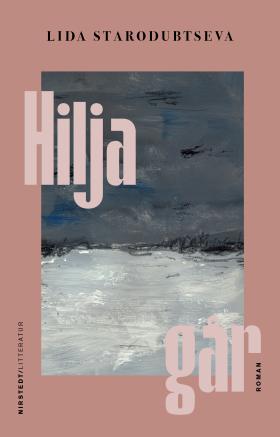
Hilja går
Nirstedt/Litteratur, 2026. 208 pp. ISBN: 978-91-8996-459-4
Foreign Rights: Nirstedt/Litteratur.
We are grateful to Nirstedt/Litteratur for their permission to publish this extract.
Lida Starodubtseva is a writer and translator. Her first book, the novel cycle En oändligt lång vår (An Endlessly Long Spring, 2023), an excerpt of which was published in SBR 2025:1, was nominated for the Swedish Catapult Prize for Best Debut.
Kathy Saranpa is a translator working from Swedish, Finnish and Norwegian into English.